
![(AC) INTAN – HERBIVORE WAFERS [Small] (Sinking Wafers) [Loose Pack]](https://snkaquapets.com/wp-content/uploads/2025/08/IMG-20250903-WA0099-600x600.jpg)

Description
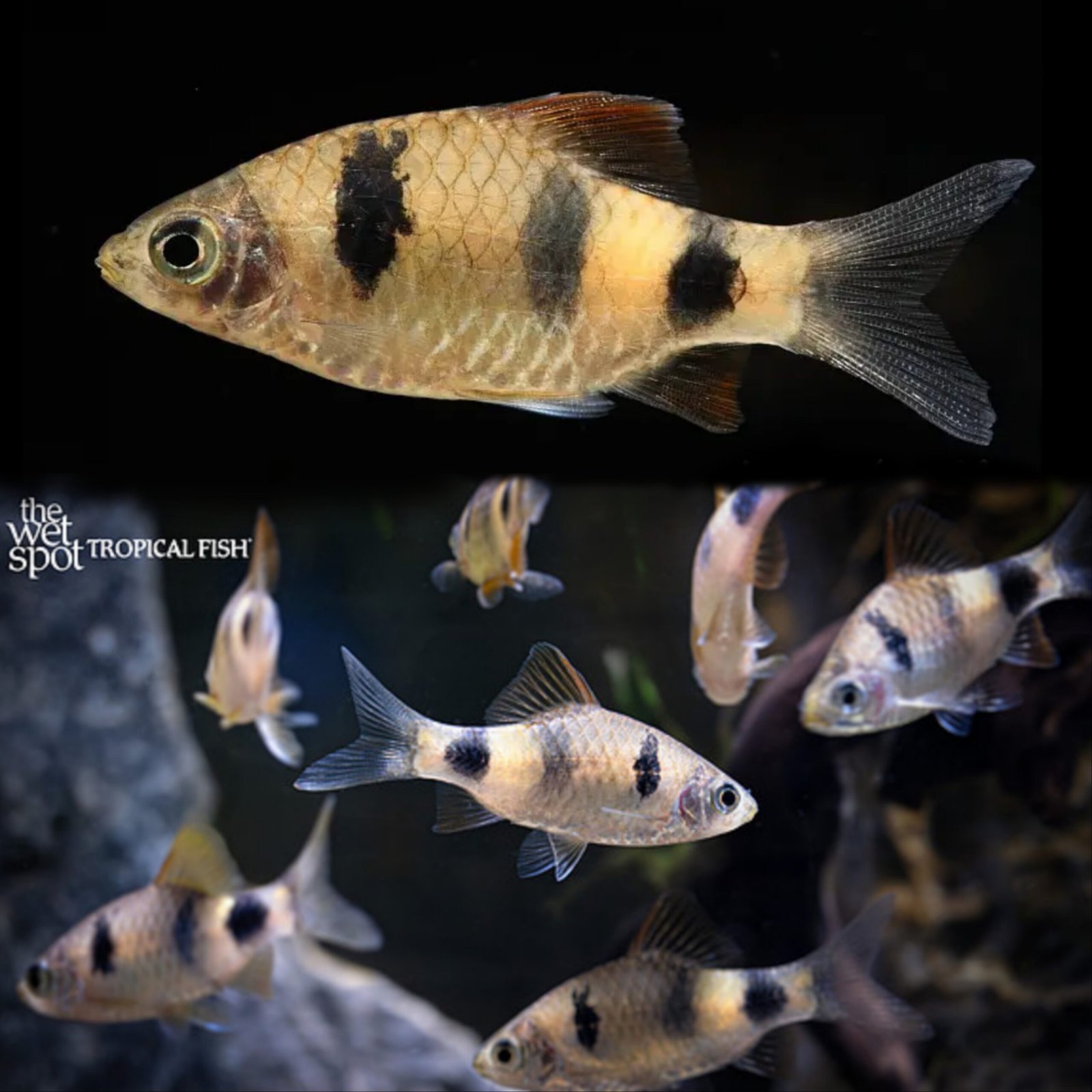
Sethnai Barb (Puntius setnai)
📌 Basic Info
Scientific Name: Puntius setnai
Common Names: Sethnai Barb, Setnai Barb, Golden Barb
Family: Cyprinidae (Barbs)
Order: Cypriniformes
Origin: India — rivers and streams in Maharashtra and surrounding regions
Size: Up to 4 inches (10 cm) in captivity
Lifespan: 5 – 8 years
Tank Zone: Mid-level dweller; peaceful to semi-aggressive
🌊 Water Parameters
TDS: 100 – 250 ppm
pH: 6.5 – 7.5
Temperature: 22 – 28°C (72 – 82°F)
Hardness: 5 – 15 dGH
🐟 Characteristics
Body: Small, elongated body with golden-yellow to bronze coloration, slightly compressed laterally; males are more vibrant, especially during breeding.
Behavior: Peaceful but may show mild territorial behavior; active swimmer.
Swimming Style: Constant mid-level swimmer; often seen in small groups.
Unique Feature: Hardy species suitable for community tanks; males display brighter colors during courtship.
Nature: Social and moderately active; thrives best in groups.
🍽️ Food
Type: Omnivorous
Diet: High-quality flake or pellet foods, live/frozen foods (daphnia, brine shrimp, bloodworms), and vegetable matter
Feeding: Twice daily in small amounts
Tip: Provide varied diet to maintain vibrant coloration and health
🛠️ Maintenance
Tank Size: Minimum 20 gallons (75 L) for a small group
Filtration: Moderate filtration with good water flow
Decor: Open swimming space with plants along edges; smooth substrate
Lighting: Moderate
Water Change: 20–30% weekly to maintain water quality
👥 Social Behavior
Minimum Group Size: 5 or more (shoaling species)
Tank Mates: Other peaceful barbs, tetras, rasboras, danios
Avoid: Aggressive or very slow-moving fish
✅ Do’s
-
Keep in groups to encourage natural schooling behavior
-
Provide open swimming space with some planted areas
-
Maintain stable water conditions and clean water
-
Offer a varied diet to enhance coloration
❌ Don’ts
-
Don’t keep alone — may become stressed
-
Don’t house with aggressive species
-
Don’t neglect water changes or filtration
⭐ Quick Tips
The Sethnai Barb is a hardy, colorful, and social freshwater fish, perfect for community aquariums.
Best kept in groups of 5 or more, it displays active schooling behavior and is ideal for aquarists seeking a medium-sized, vibrant, and low-maintenance barb.