
![(AC) INTAN – HERBIVORE WAFERS [Small] (Sinking Wafers) [Loose Pack]](https://snkaquapets.com/wp-content/uploads/2025/08/IMG-20250903-WA0099-600x600.jpg)
![(A) INTAN – FLOWERHORN PELLETS [SMALL] (Floating Pellets) [Loose Pack]](https://snkaquapets.com/wp-content/uploads/2025/08/IMG-20250903-WA0112-600x600.jpg)
Description
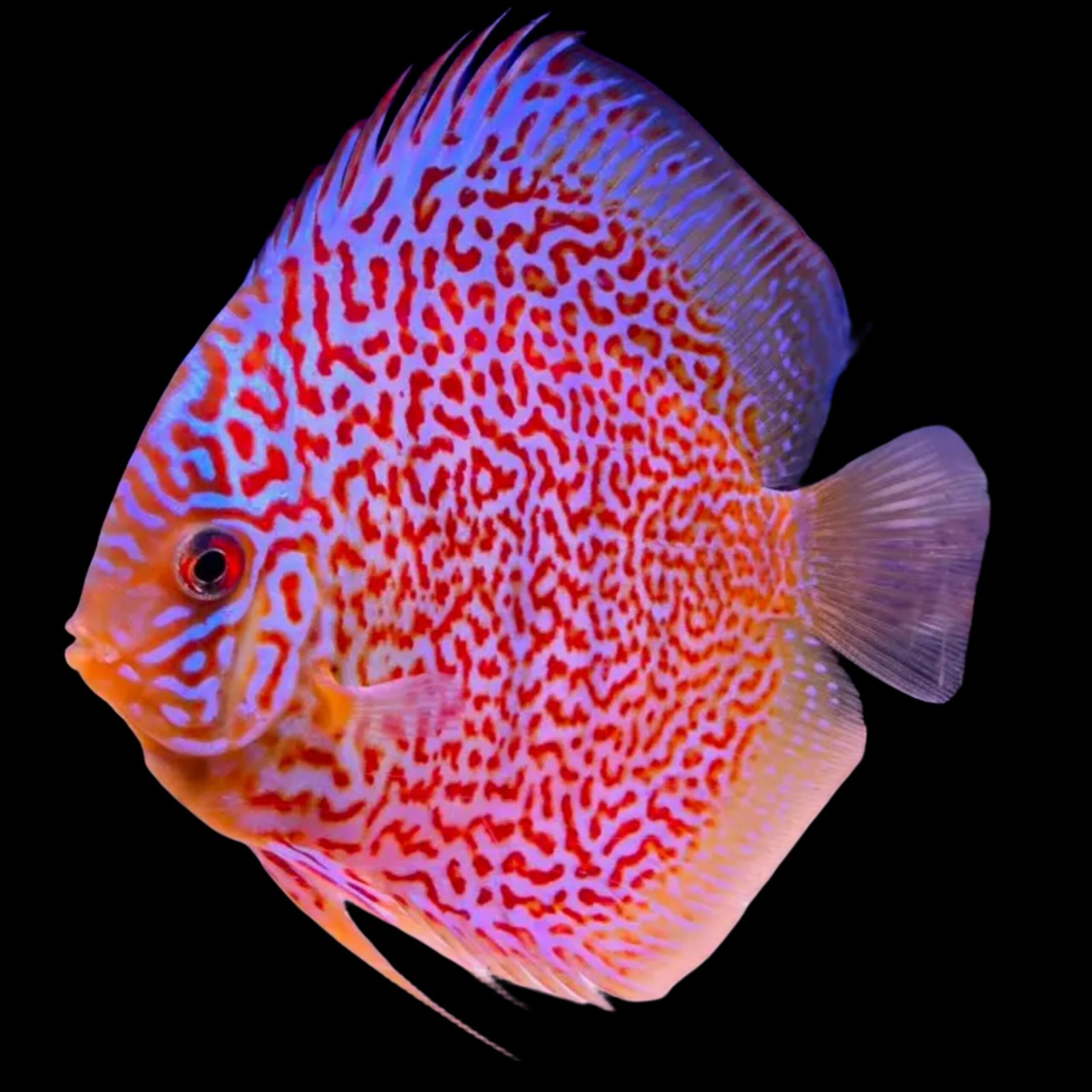
Ring Leopard Discus Fish (Symphysodon aequifasciatus)
📌 Basic Info
-
Scientific Name: Symphysodon aequifasciatus
-
Common Names: Ring Leopard Discus, Leopard Ring Discus, Ring Spotted Discus
-
Family: Cichlidae (Cichlid Family)
-
Order: Cichliformes
-
Origin: Selectively bred hybrid — developed from Red Leopard and Spotted Discus strains in Malaysia and Thailand.
-
Size: 6 – 8 inches (15 – 20 cm)
-
Lifespan: 10 – 15 years
-
Tank Zone: Middle
🌊 Water Parameters
-
Temperature: 28 – 31°C (82 – 88°F)
-
pH: 6.0 – 6.8
-
Hardness: 3 – 8 dGH
-
TDS: 120 – 180 ppm
🐟 Characteristics
-
Body: Classic discus round body with a smooth, symmetrical form.
-
Coloration: Vivid red or orange background beautifully decorated with distinct blue circular rings or spots spread across the body and fins.
-
Pattern: Each ring forms a clear, rounded mark rather than dense spots — resembling small rings or halos, hence the name “Ring Leopard.”
-
Fins: Transparent with streaks of turquoise blue and fine ring extensions.
-
Eyes: Bright red, contrasting sharply with the turquoise-ringed body.
-
Behavior: Calm, elegant swimmer that enjoys slow currents and clean water.
-
Special Feature: The unique ring-shaped pattern gives this discus a 3D shimmering look, making it one of the most striking ornamental varieties.
🍽️ Diet
-
Type: Omnivorous
-
Preferred Food: High-protein discus pellets, bloodworms, beef heart mix, and brine shrimp.
-
Feeding Frequency: 2–3 times per day in small portions.
-
Tip: Include color-enhancing foods (spirulina, astaxanthin) to keep rings bright and defined.
🛠️ Tank Setup & Maintenance
-
Tank Size: Minimum 250 liters (65 gallons) for 5–6 adult discus.
-
Filtration: Strong biological filtration with gentle water flow.
-
Substrate: Bare bottom or fine sand.
-
Decor: Driftwood, low light plants, and dark backgrounds enhance ring contrast.
-
Lighting: Moderate to dim — ideal to highlight blue ring patterns.
-
Water Change: 30–40% every 2–3 days to maintain excellent water clarity.
👥 Social Behavior
-
Group Size: 5 or more for schooling security.
-
Tank Mates: Peaceful fish like cardinal tetras, corydoras, or dwarf cichlids.
-
Avoid: Aggressive or overly active tank mates.
-
Compatibility: Beautiful when paired with White Leopard, Leopard Snakeskin, and Red Map Discus for a color-balanced display.
✅ Do’s
• Maintain soft, warm, stable water.
• Provide calm environment and gentle lighting.
• Feed high-quality, color-boosting diet regularly.
❌ Don’ts
• Avoid sudden temperature or pH changes.
• Don’t overcrowd the tank.
• Avoid bright, harsh light.
⭐ Quick Tips
The Ring Leopard Discus Fish stands out for its unique circular blue-ring patterns over a glowing red body. Highly sought after by collectors, it’s a rare and premium discus strain that adds elegance, depth, and sophistication to any display aquarium.