
![(A) INTAN – FLOWERHORN PELLETS [SMALL] (Floating Pellets) [Loose Pack]](https://snkaquapets.com/wp-content/uploads/2025/08/IMG-20250903-WA0112-600x600.jpg)




Description
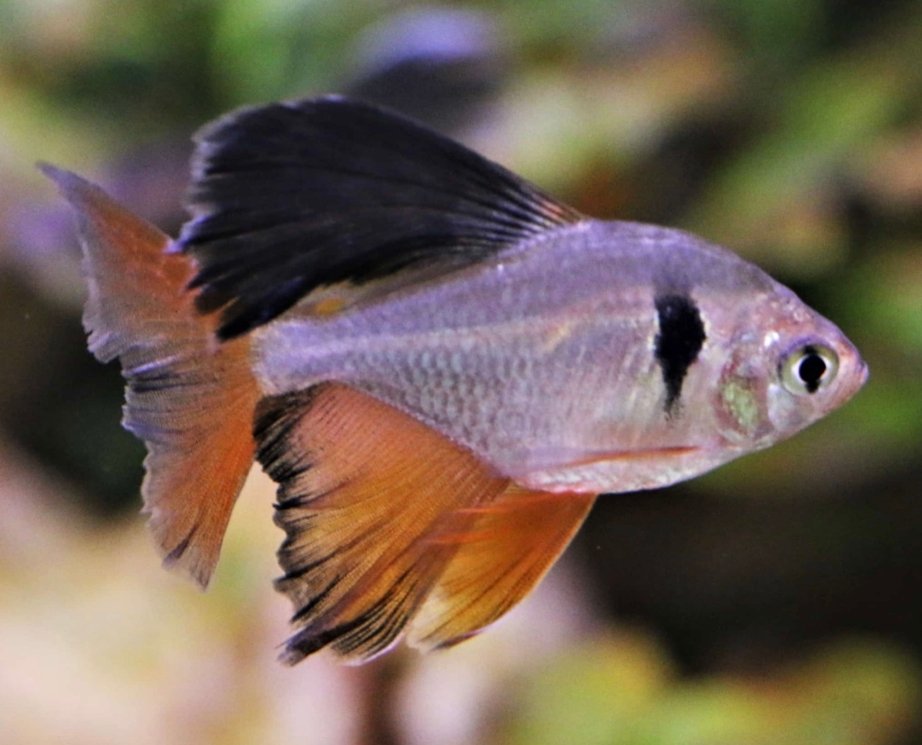
Veiltail Serpae Tetra (Hyphessobrycon eques)
📌 Basic Info
-
Scientific Name: Hyphessobrycon eques
-
Common Names: Veiltail Serpae Tetra, Red Minor Tetra, Jewel Tetra
-
Family: Characidae (Tetra Family)
-
Order: Characiformes
-
Origin: South America — Amazon River Basin, Paraguay, and Guaporé River regions
-
Size: 4–5 cm (1.5–2 inches)
-
Lifespan: 5–7 years
-
Tank Zone: Middle
🌊 Water Parameters
-
Temperature: 24 – 28°C (75 – 82°F)
-
pH: 5.5 – 7.5
-
Hardness: 2 – 15 dGH
🐠 Characteristics
-
Body Shape: Deep-bodied, laterally compressed tetra.
-
Coloration: Fiery red to reddish-orange body with a distinct black patch behind the gills.
-
Fins: Extended, flowing fins — especially the dorsal and tail fins — giving it the “veiltail” appearance.
-
Special Feature: The elongated fins make it more graceful than the standard Serpae Tetra variety.
-
Behavior: Active and semi-aggressive; may nip fins if kept in small numbers.
🍽️ Diet
-
Type: Omnivorous
-
Food: High-quality flakes, micro pellets, frozen or live foods like bloodworms, daphnia, and brine shrimp.
-
Feeding Frequency: 1–2 times daily in small portions.
🏠 Tank Setup
-
Minimum Tank Size: 60 liters (15 gallons)
-
Substrate: Dark sand or fine gravel.
-
Décor: Plants, driftwood, and open swimming areas.
-
Lighting: Moderate; darker background enhances red coloration.
-
Water Flow: Gentle to moderate current.
👥 Behavior & Compatibility
-
Nature: Lively schooling fish.
-
Best Kept In: Groups of 6 or more to reduce fin-nipping behavior.
-
Tank Mates: Compatible with barbs, rainbowfish, corydoras, and robust tetras.
-
Avoid: Long-finned or slow-moving fish (like guppies or angelfish).
✅ Do’s
• Keep in a well-planted tank with some open space.
• Maintain a group for natural behavior.
• Offer a mix of live and dry foods to enhance color.
❌ Don’ts
• Don’t keep alone or in pairs — can become aggressive.
• Avoid sharp décor that could tear fins.
⭐ Quick Tip:
The Veiltail Serpae Tetra is a vibrant, energetic schooling fish that adds a brilliant red flash and graceful fin movement to community aquariums. Keep them in groups under soft light for best appearance and peaceful behavior.

