


Description
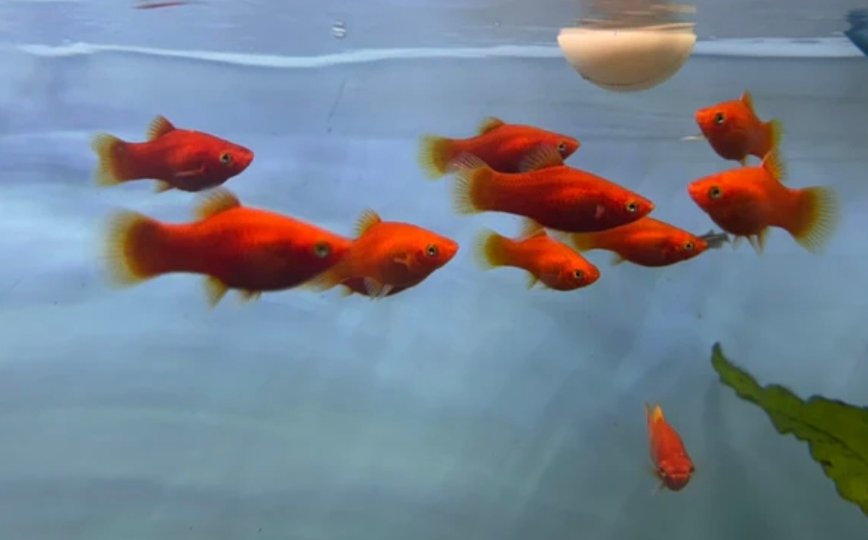
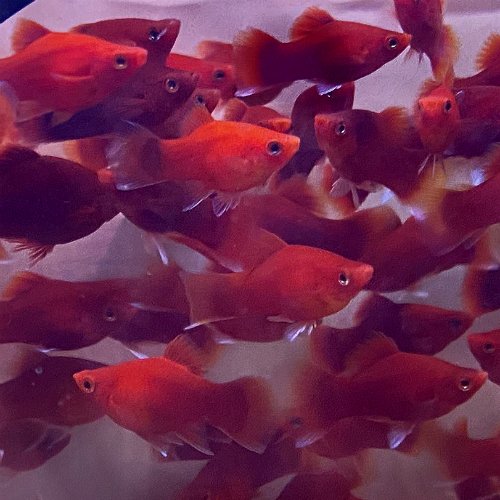
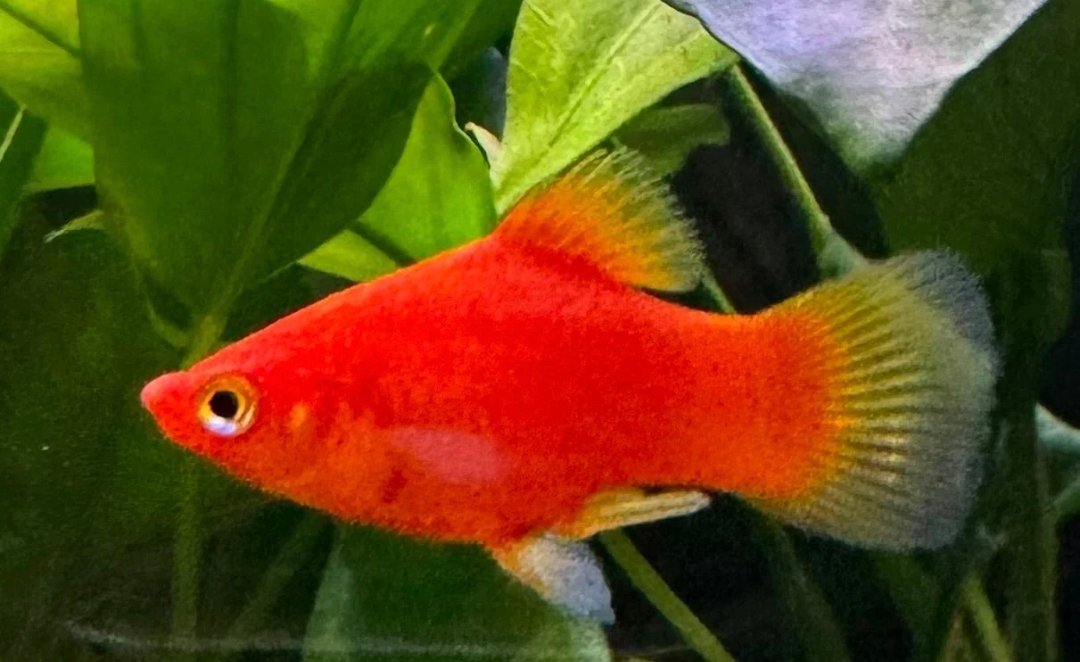
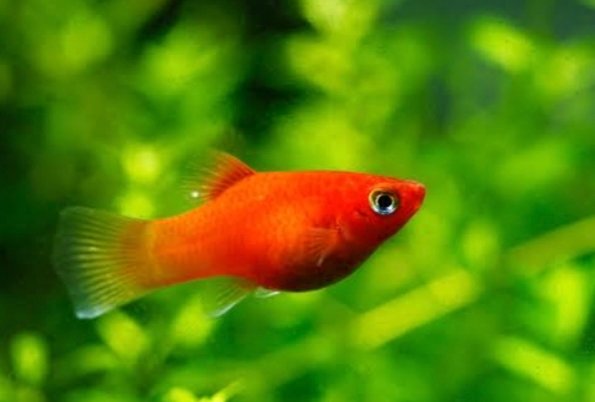
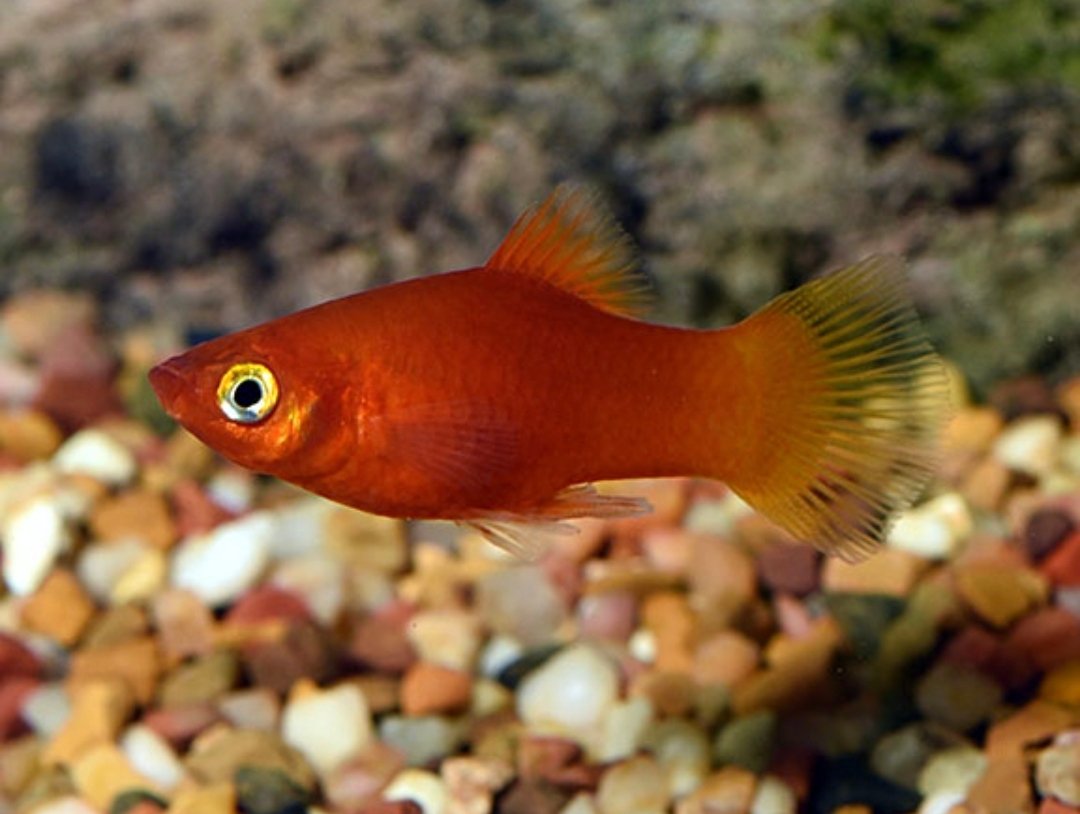
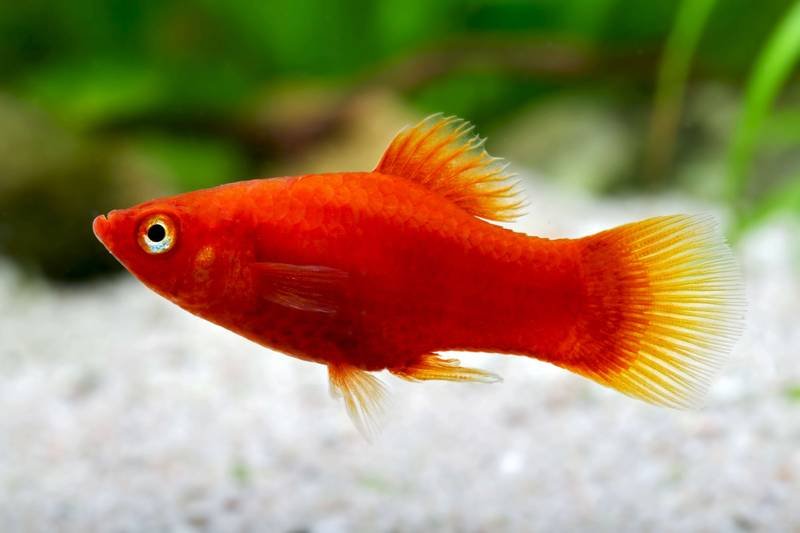
Coral Red Platy (Xiphophorus maculatus)
📌 Basic Info
-
Scientific Name: Xiphophorus maculatus
-
Common Names: Coral Red Platy, Red Platy, Red Wag Platy
-
Family: Poeciliidae
-
Order: Cyprinodontiformes
-
Origin: Central America — Mexico, Belize, and Honduras (aquarium-bred varieties worldwide)
-
Size: 4 – 6 cm (1.5 – 2.5 inches)
-
Lifespan: 3 – 5 years
-
Tank Zone: Middle to top
🌊 Water Parameters
-
Temperature: 22 – 28°C (72 – 82°F)
-
pH: 7.0 – 8.2
-
Hardness: 10 – 25 dGH
🐠 Characteristics
-
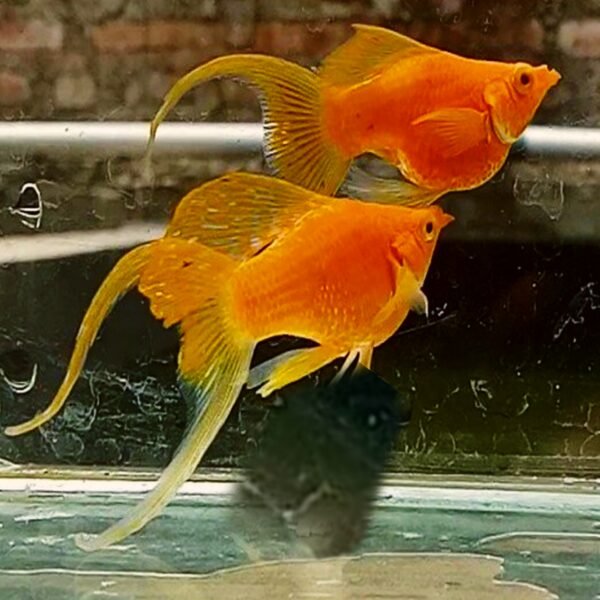
Body Shape: Slender, oval body typical of platies.
-
Coloration: Vibrant coral-red body with a shimmering finish; some strains may show darker fins or tails.
-
Fins: Rounded dorsal and caudal fins; males have a gonopodium (modified anal fin).
-
Behavior: Active, peaceful, and very hardy — perfect for beginners.
-
Special Feature: Selectively bred for its intense coral-red coloration and consistent brightness under aquarium lighting.
🍽️ Diet
-
Type: Omnivorous
-
Diet: High-quality flakes, micro-pellets, brine shrimp, bloodworms, and blanched vegetables (like zucchini or spinach).
-
Feeding Frequency: 1–2 times daily in small amounts.
🛠️ Tank Maintenance
-
Tank Size: Minimum 40 liters (10 gallons) for a small group.
-
Filtration: Moderate flow with stable, clean water.
-
Substrate: Fine gravel or sand.
-
Decor: Live plants, driftwood, and stones — they enjoy open swimming areas with some cover.
-
Lighting: Moderate; enhances coral-red coloration.
-
Water Change: 25–30% weekly.
👥 Social Behavior
-
Nature: Peaceful and social; thrives in community tanks.
-
Tank Mates: Guppies, Mollies, Swordtails, Corydoras, small Tetras.
-
Avoid: Aggressive fish or fin-nippers.
-
Breeding: Livebearer; females give birth to fry. Easy to breed in planted tanks.
✅ Do’s
• Keep in small groups (3 or more).
• Feed a balanced, color-enhancing diet.
• Provide plants or floating cover for fry.
❌ Don’ts
• Avoid overcrowding the tank.
• Don’t keep with large or aggressive fish.
• Avoid overfeeding — can lead to poor water quality.
⭐ Quick Tip:
The Coral Red Platy is one of the most colorful and easy-to-keep livebearers, perfect for beginners and community aquariums. Its bright coral-red tone and peaceful nature make it a favorite for planted and decorative setups.