

Description
Tropheus Duboisi Red Band (Tropheus duboisi)
📌 Basic Info
Scientific Name: Tropheus duboisi
Common Names: Duboisi Cichlid, Red Band Duboisi, White-Spotted Tropheus
Family: Cichlidae (Cichlid Family)
Order: Cichliformes
Origin: Lake Tanganyika, East Africa — commonly found near Bulu Point and Kigoma regions, inhabiting rocky shorelines and algae-covered shallows.
Size: Up to 10–12 cm (4–5 inches)
Lifespan: 8 – 10 years
Tank Zone: Mid and bottom dweller
🌊 Water Parameters
Temperature: 24 – 28°C (75 – 82°F)
pH: 7.8 – 9.0 (alkaline)
Hardness: 10 – 20 dGH
TDS: 200 – 400 ppm
🐟 Characteristics
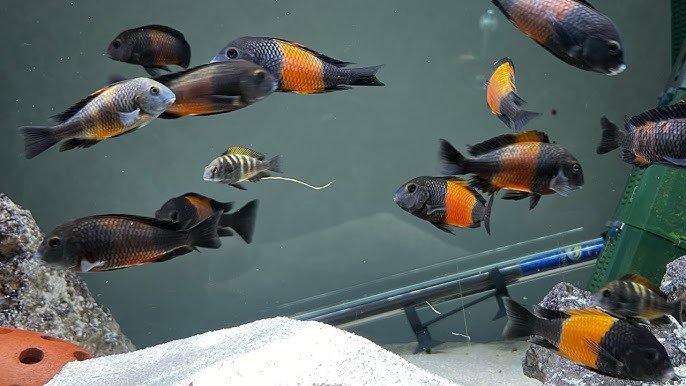
Juvenile Appearance: Deep black body with numerous bright white spots.
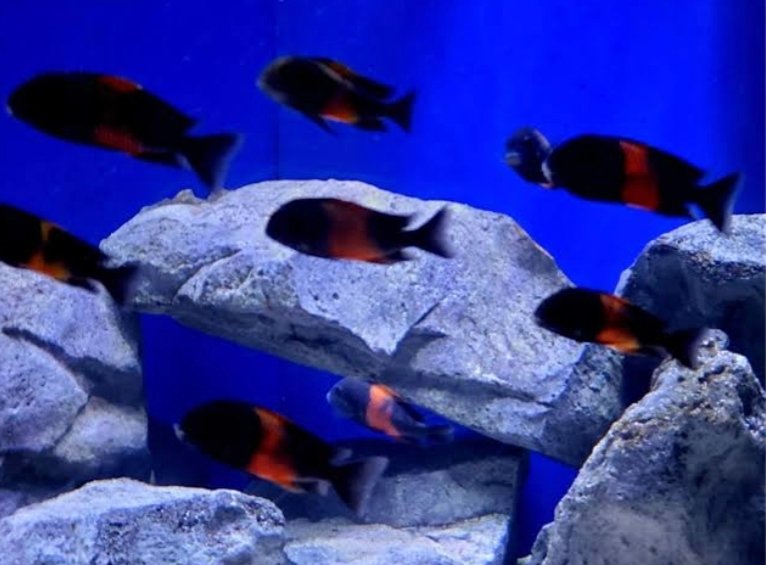
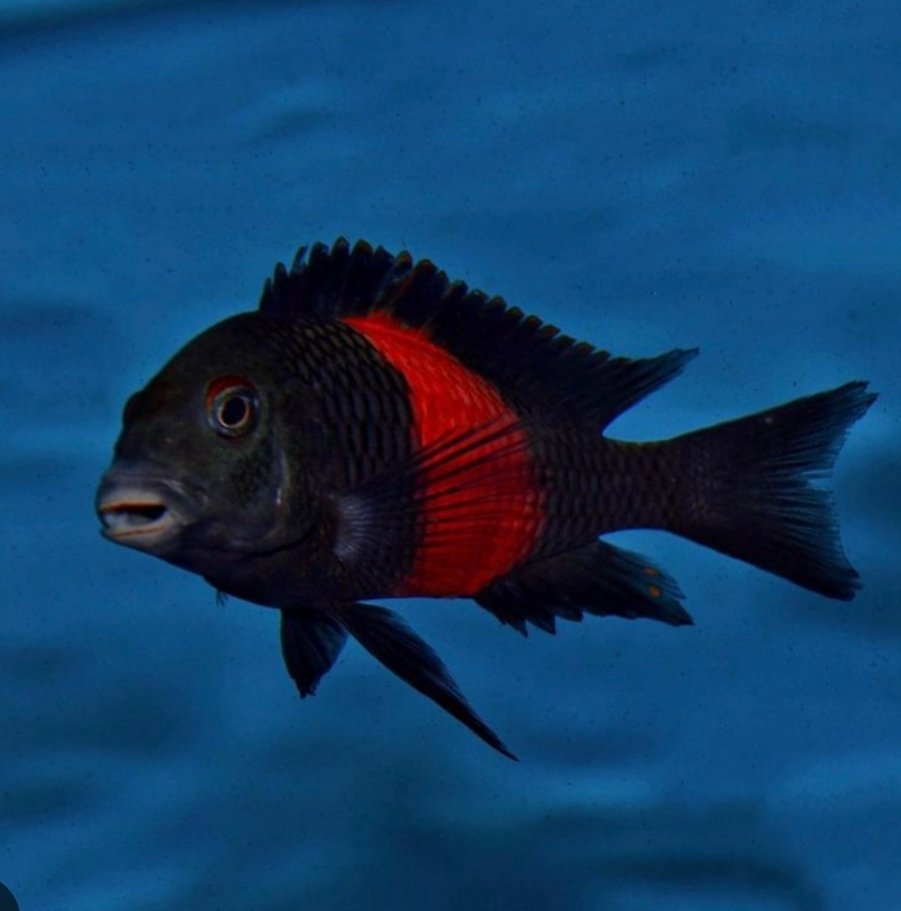
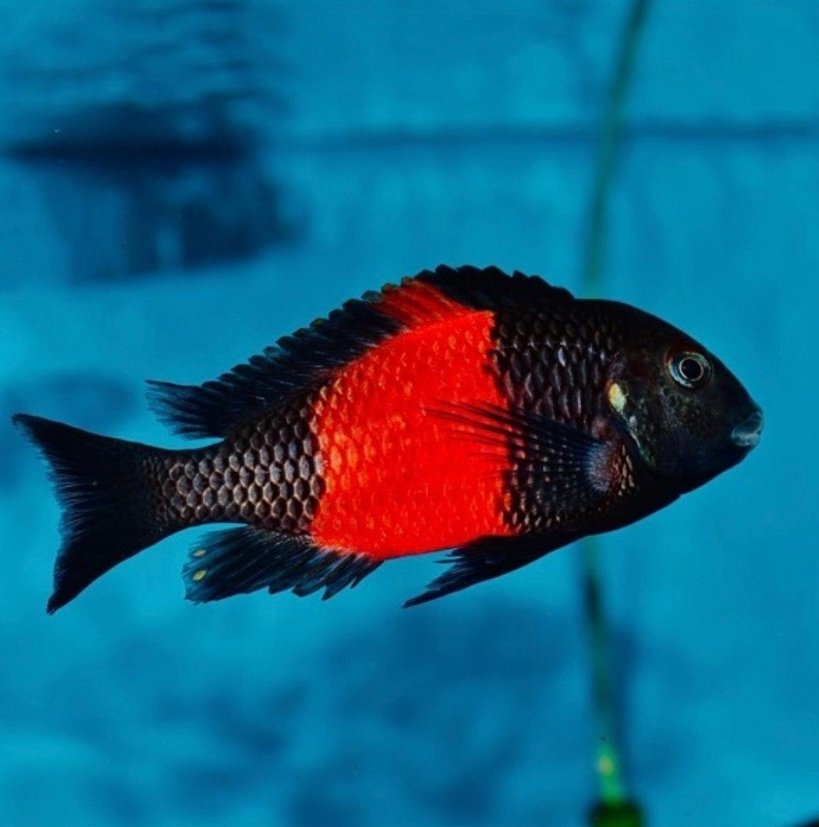
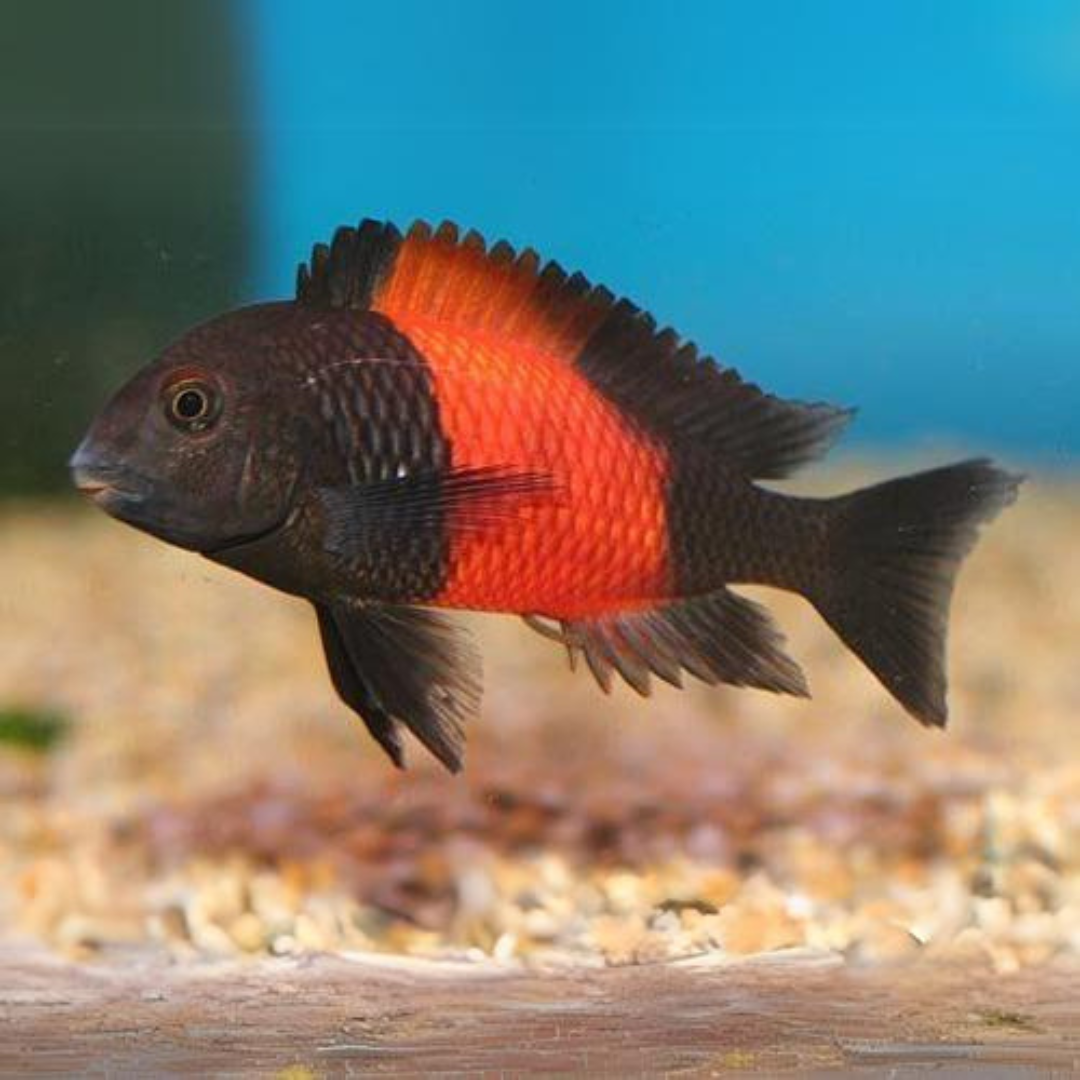
Adult Appearance: Adults lose their spots and develop a dark navy to black body with a distinct reddish-orange band across the midsection.
Body Shape: Robust and muscular with rounded fins suited for rocky environments.
Behavior: Highly active, territorial, and social — best kept in structured colonies.
Special Feature: Known for its stunning color transformation from juvenile to adult stages.
🍽️ Diet
Type: Herbivorous
Diet: Spirulina-based flakes, algae wafers, blanched vegetables (spinach, zucchini), and occasional high-quality cichlid pellets.
Feeding Frequency: 2–3 times daily in small amounts.
Tip: Avoid meaty foods — excessive protein can cause “Malawi bloat.”
🛠️ Maintenance
Tank Size: Minimum 200 liters (55 gallons) for a small colony.
Filtration: Strong biological filtration with good oxygenation and water flow.
Substrate: Fine sand or crushed coral to maintain alkalinity.
Decor: Rocky caves and ledges for territorial separation.
Lighting: Moderate to bright.
Water Change: 20–25% weekly to keep parameters stable.
👥 Social Behavior
Nature: Semi-aggressive and territorial, especially during feeding and breeding.
Group Size: Best kept in colonies of 8–12 individuals to disperse aggression.
Tank Mates: Other Tanganyikan species like Julidochromis, Neolamprologus, and Synodontis catfish.
Avoid: Slow-moving or soft-water species (e.g., Discus, Angelfish).
✅ Do’s
• Maintain alkaline, hard water conditions.
• Provide a colony setup with plenty of rocks.
• Feed mainly spirulina and algae-based foods.
❌ Don’ts
• Avoid high-protein or fatty foods.
• Don’t mix with aggressive African cichlids from other lakes (like Mbuna).
• Avoid keeping singles or pairs — promotes aggression.
⭐ Quick Tip:
The Tropheus Duboisi Red Band is one of Lake Tanganyika’s most striking rock-dwelling cichlids, admired for its beautiful red mid-band and bold juvenile pattern. Ideal for advanced hobbyists, it thrives in clean, alkaline water with a proper herbivorous diet and colony environment.