
Description
Paramecium Culture – The Essential First Food for Micro-Fry
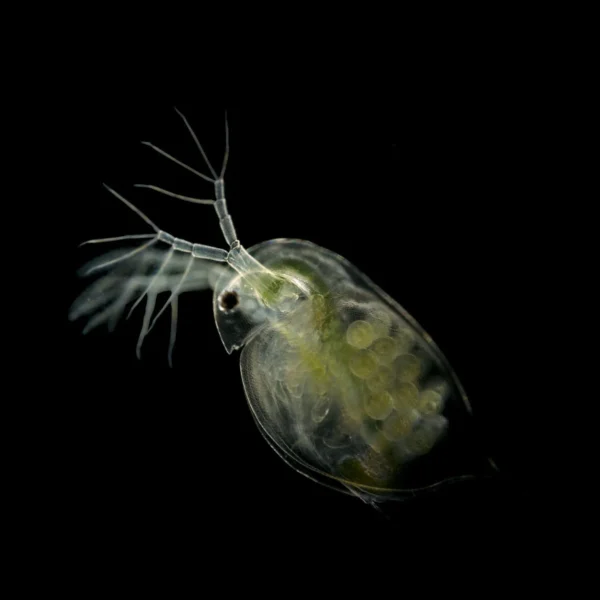
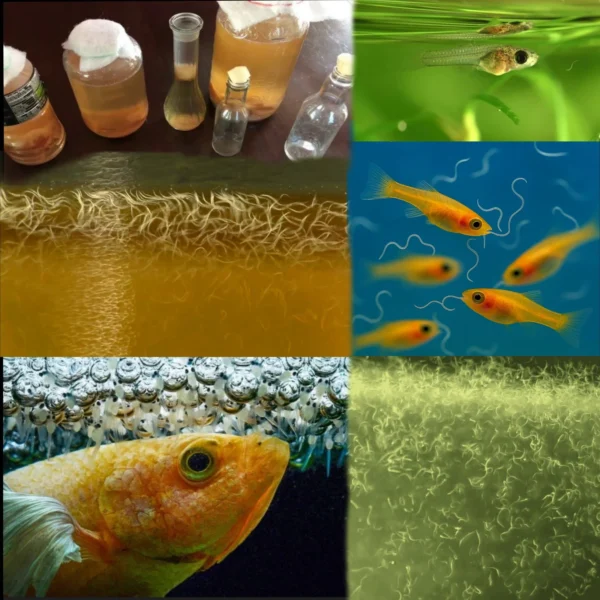
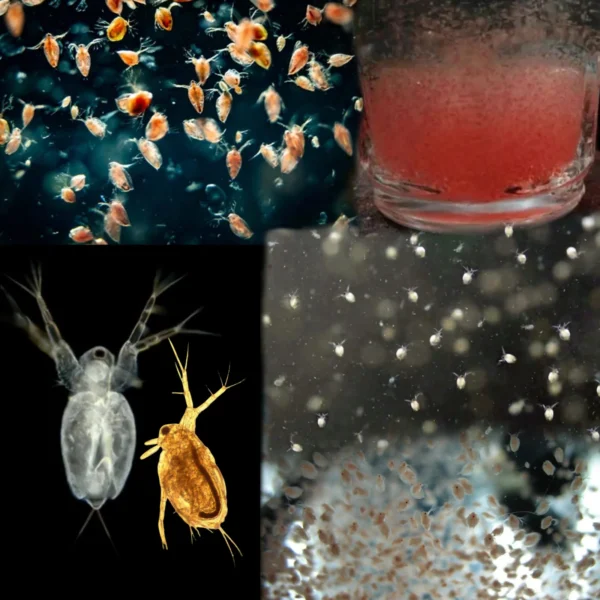
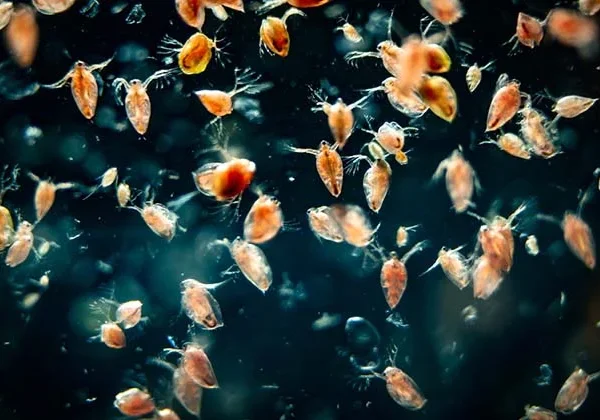
Paramecium (often referred to as Infusoria) are microscopic, single-celled ciliates that serve as the critical “Stage 1” food for the tiniest fish larvae. Many species, such as Gouramis, Bettas, and certain Characins, hatch so small that they cannot even swallow a baby brine shrimp or a microworm. A Paramecium culture provides a cloud of nutritious, swimming organisms that are the perfect size for these delicate newborns to thrive during their first few days of life.
💡 Key Features
✅ Microscopic Size – Ranging from 50 to 300 microns, they are small enough for the most microscopic fry to consume immediately.
✅ Stays Suspended – Unlike worms that sink, Paramecium swim throughout the water column, making them easily accessible to free-swimming fry.
✅ Rapid Reproduction – Under the right conditions, populations double quickly, ensuring a steady food supply for your nursery tanks.
✅ Triggers Hunting Instincts – Their jerky, swimming motion attracts the attention of fry, encouraging them to start feeding actively.
✅ Clean Live Food – When cultured correctly, they are a much cleaner alternative to powdered “fry foods” which can quickly foul the water.
🐟 Suitable For
Micro-Fry (Bettas, Gouramis, Killifish, and Rainbowfish)
Egg-Scatterers (Small Rasboras and Tetras)
Filter Feeders (Freshwater mussels and certain species of shrimp)
Tadpoles (Early stage amphibian larvae)
Reef Tanks (Small organisms in marine refugiums also benefit)
⚙️ Specifications
Product Name: Paramecium Culture (Paramecium caudatum)
Type: Live Liquid Starter Culture
Size: 50–300 Microns (Visible only as tiny white dust-like specks in bright light)
Application: Initial food source for fry during the first 3–7 days after hatching.
🔧 How to Use
Locate the Cloud: Look for the densest concentration of Paramecium, usually near the surface or around the light source.
Harvest: Use a pipette or a turkey baster to draw out the concentrated liquid.
Feed: Squirt small amounts directly into the fry tank 3–4 times a day.
Monitor: Use a magnifying glass to ensure the fry are “belly-up” and feeding on the microscopic organisms.
🧼 Maintenance & Culturing
Culture Media: Keep in a glass jar filled with dechlorinated water and a “fuel” source such as a piece of dried banana peel, crushed rabbit pellets, or a few drops of milk/yeast water.
Environment: Store at room temperature ($20-26^\circ\text{C}$) with indirect light.
Harvesting Tip: If the culture smells overly foul, it is likely crashing; always keep 2-3 separate culture jars running to ensure you never run out of food.
Odor Control: A healthy culture has a slightly earthy or “pond” smell, but should not be intensely putrid.
✅ Why Choose Paramecium?
For many fish breeders, Paramecium is the difference between a successful spawn and a total loss. It fills the “size gap” that commercial fry foods simply cannot reach. By providing a natural, living food source that mimics what fry find in the wild, you significantly increase the survival rate and growth speed of your most delicate species.