

Description
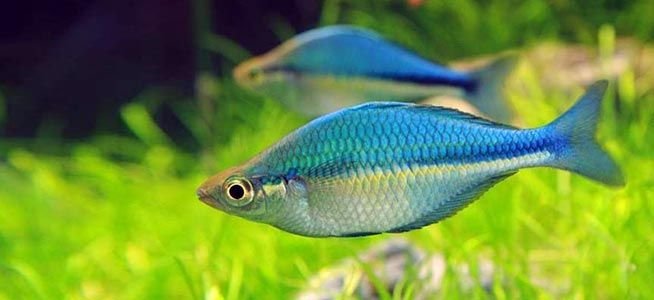
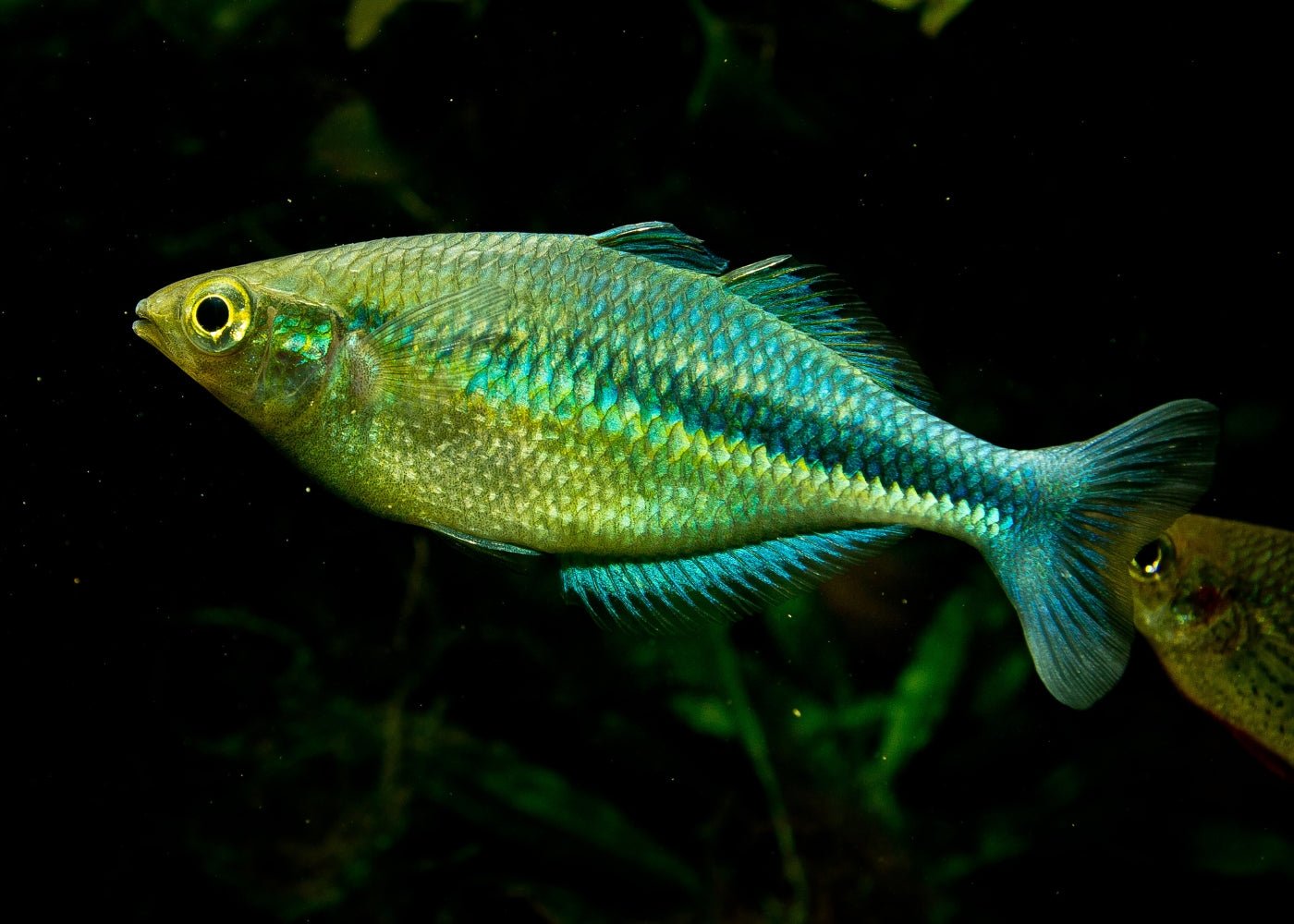
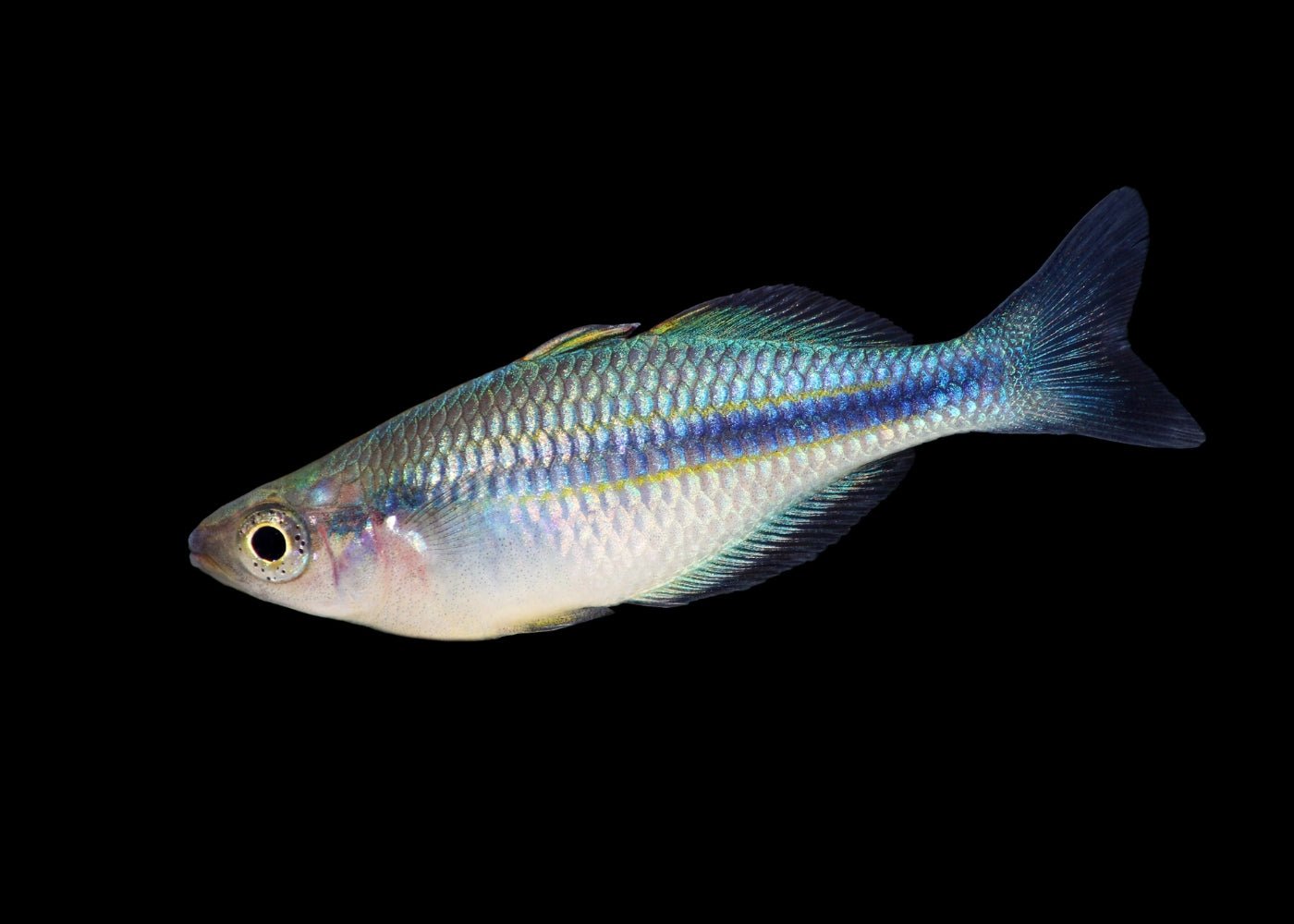
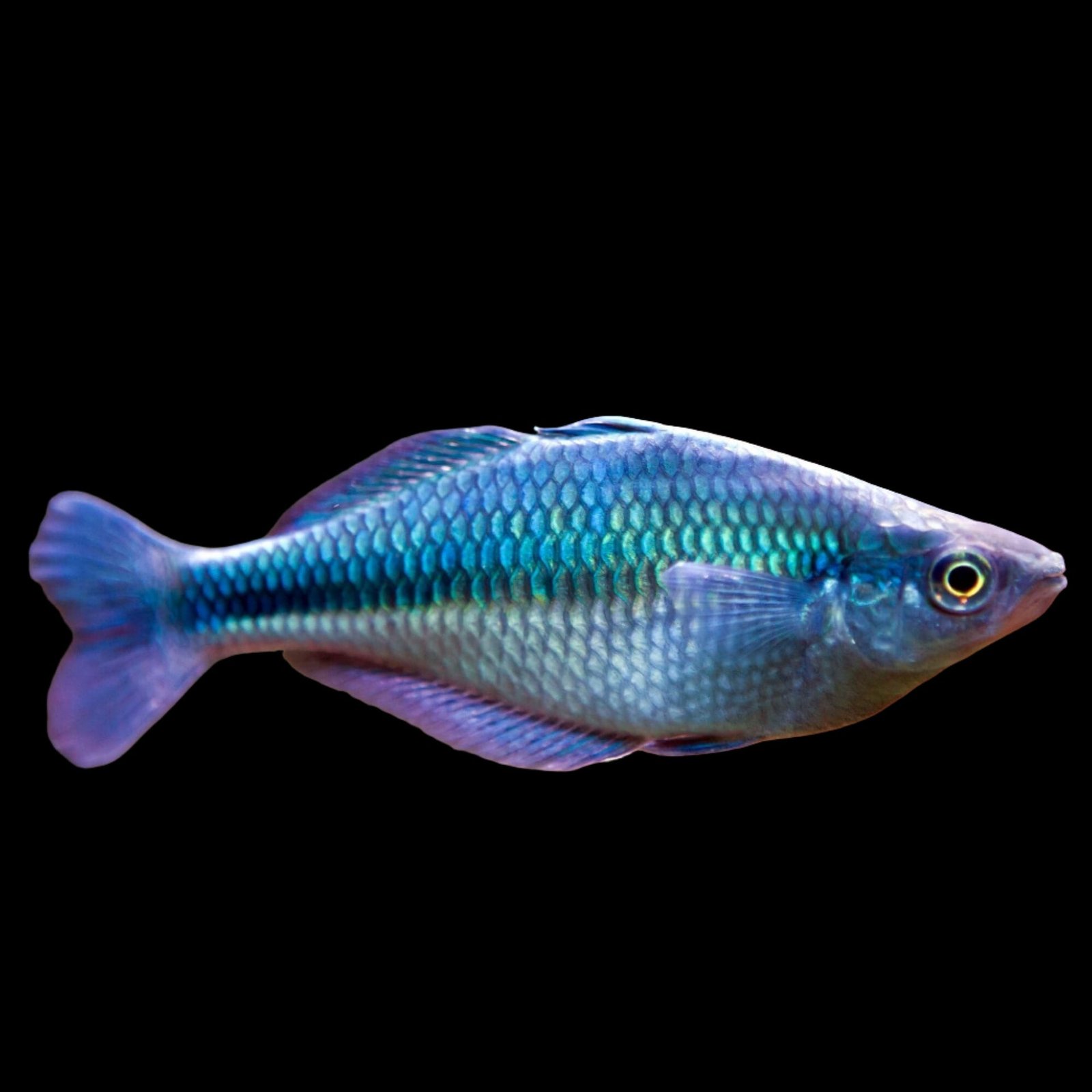
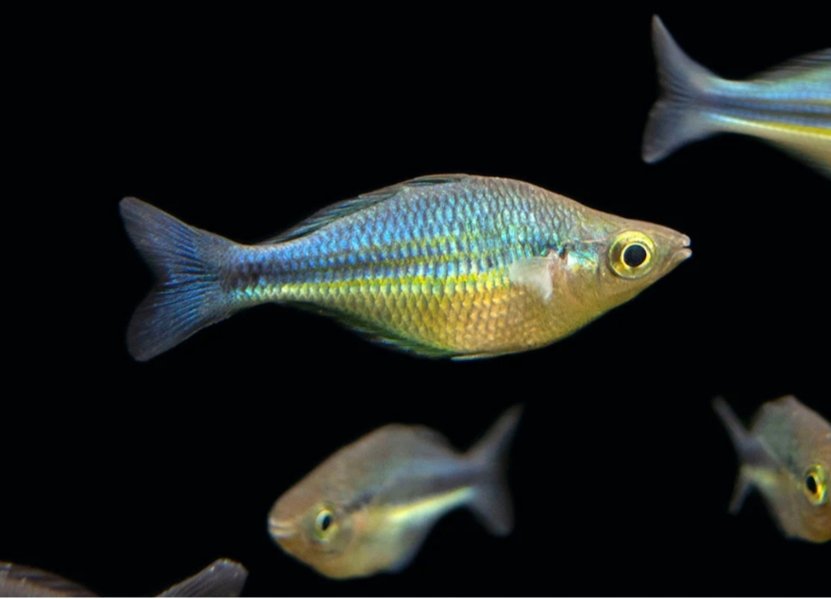
Turquoise Blue Rainbow
📌 Basic Info
Scientific Name: Melanotaenia lacustris (Turquoise Blue variant)
Common Names: Turquoise Blue Rainbow, Turquoise Rainbowfish
Family: Melanotaeniidae (Rainbowfish Family)
Order: Atheriniformes
Origin: Papua New Guinea — mainly Lake Sentani and surrounding freshwater rivers
Size: Up to 4 inches (10 cm) in captivity
Lifespan: 5 – 8 years
Tank Zone: Mid to upper water column
🌊 Water Parameters
TDS: 100 – 250 ppm
pH: 6.5 – 7.5
Temperature: 24 – 28°C (75 – 82°F)
Hardness: 5 – 15 dGH
🐟 Characteristics
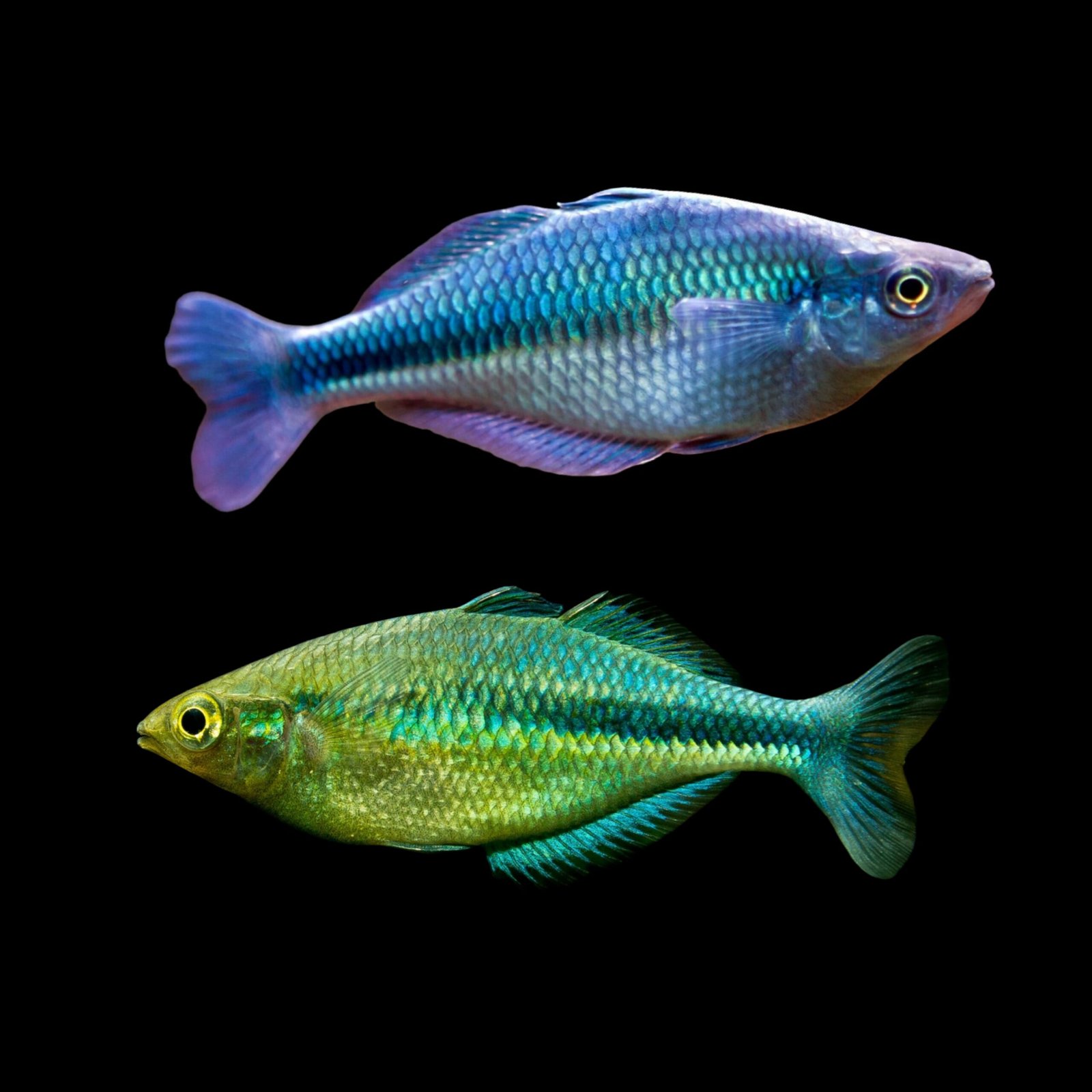
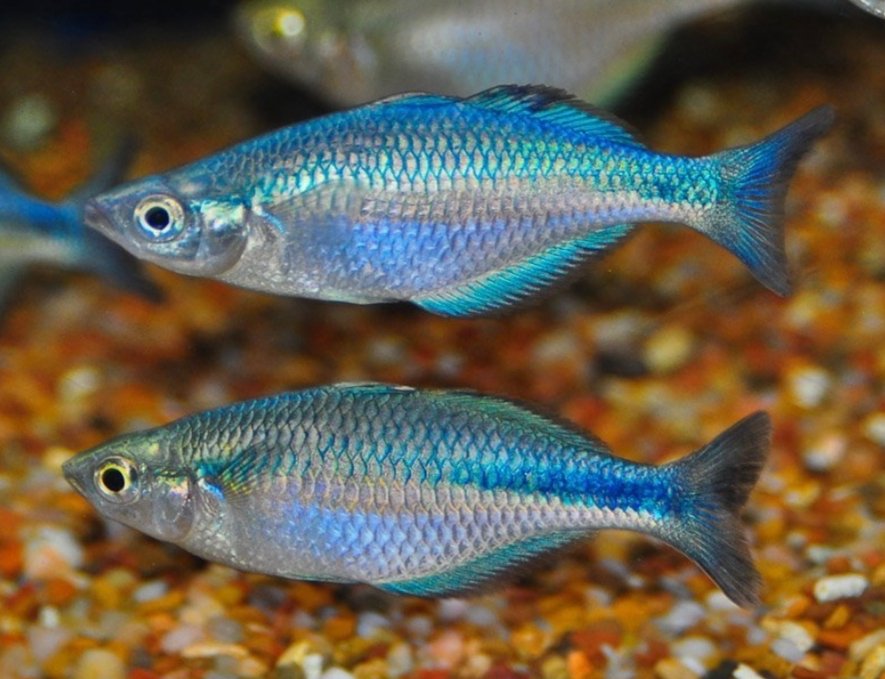
Body: Laterally compressed and elongated body with smooth, reflective scales.
Coloration: Stunning turquoise blue body; males often display brighter blue fins.
Fins: Dorsal and anal fins elongated; caudal fin slightly forked.
Behavior: Peaceful, active schooling fish; very social.
Nature: Diurnal; enjoys open swimming spaces with plants.
Special Feature: Iridescent turquoise coloration intensifies when kept in groups under proper lighting.
🍽️ Food
Type: Omnivorous
Diet: Flakes, micro-pellets, live/frozen foods like brine shrimp, daphnia, and bloodworms.
Feeding Frequency: Once or twice daily.
Tip: Feed a varied diet to maintain vibrant coloration and healthy growth.
🛠️ Maintenance
Tank Size: Minimum 80 liters (20 gallons) for a small school.
Filtration: Moderate filtration with gentle to moderate water flow.
Substrate: Sand or fine gravel.
Decor: Plants, driftwood, and open swimming areas; floating plants for security.
Lighting: Moderate to bright; enhances metallic turquoise scales.
Water Change: 20–25% weekly.
👥 Social Behavior
Group Size: Best kept in schools of 6 or more.
Tank Mates: Peaceful community fish like tetras, guppies, rasboras, and other rainbowfish.
Avoid: Aggressive or fin-nipping species.
Compatibility Note: Very social; solitary individuals may become stressed.
✅ Do’s
Keep in schools to enhance color and activity.
Provide open swimming areas with plants.
Maintain clean water with regular changes.
Feed a varied diet including live and frozen foods.
❌ Don’ts
Don’t keep singly; they are schooling fish.
Don’t house with aggressive species.
Don’t neglect water quality; sensitive to ammonia/nitrite spikes.
⭐ Quick Tips
Turquoise Blue Rainbowfish are peaceful, active, and brilliantly colored freshwater fish. Their iridescent turquoise body, vibrant fins, and schooling behavior make them perfect for planted and community aquariums, adding color, shimmer, and movement.