![(LL) Clown Featherback Knife Fish (Chitala ornata)[≈ 4,5,6 inches]](https://snkaquapets.com/wp-content/uploads/2025/10/Picsart_25-10-24_12-10-56-773-600x600.jpg)
![(LL) Albino Clown Knife Fish (Chitala ornata) [≈3 inches]](https://snkaquapets.com/wp-content/uploads/2025/10/Picsart_25-10-24_11-47-09-757-600x600.jpg)
Description
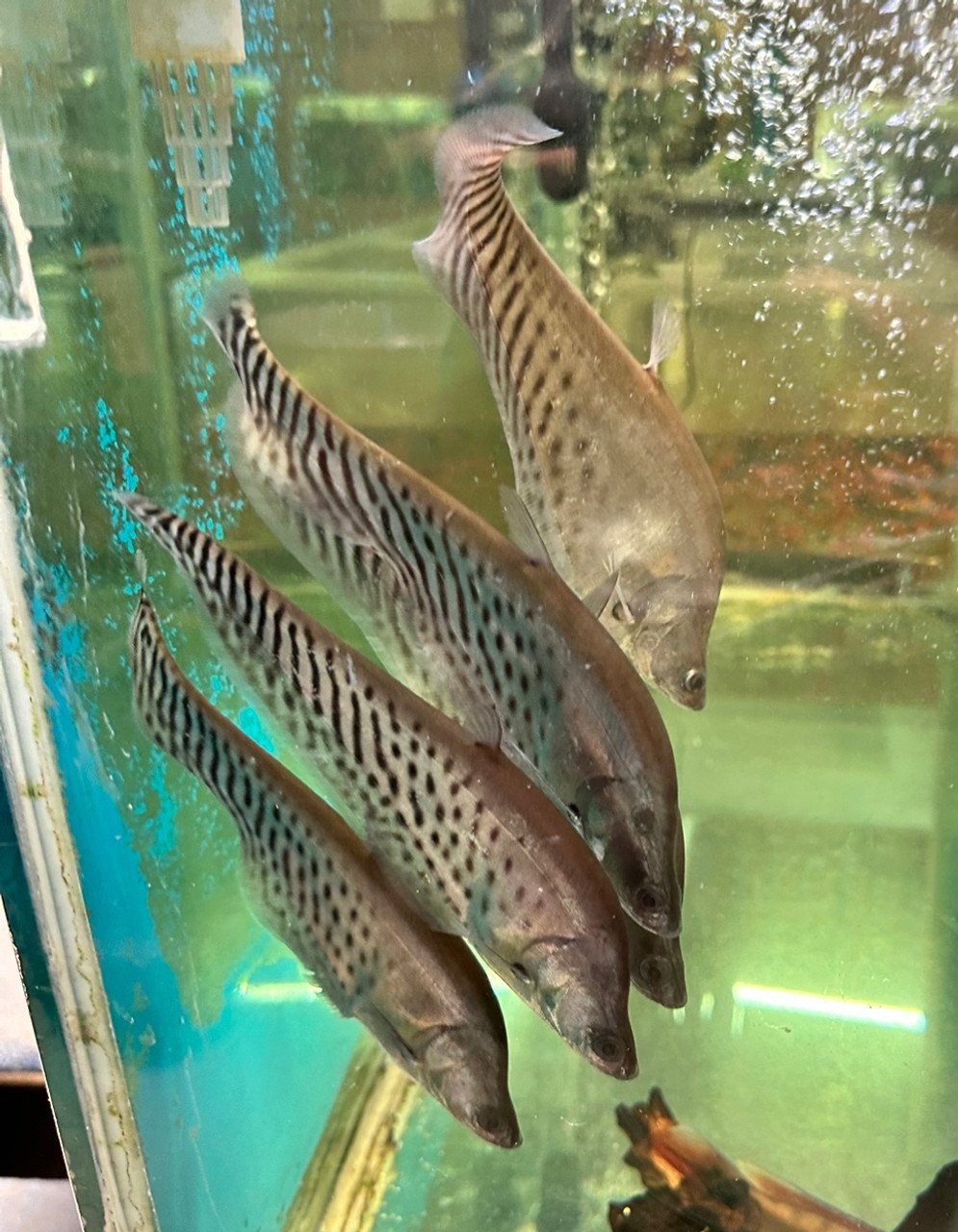
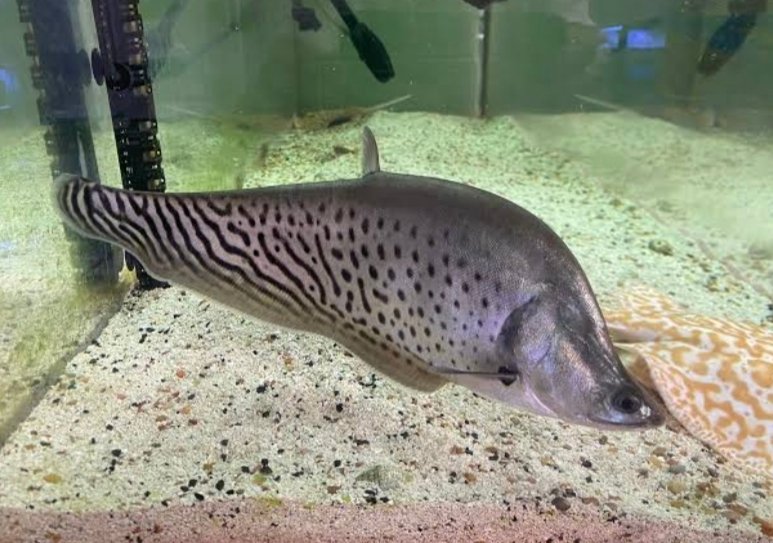
Royal Knife Fish (Chitala blanci)
📌 Basic Info
Scientific Name: Chitala blanci
Common Names: Royal Knifefish, Royal Featherback, Blanc’s Knifefish
Family: Notopteridae (Featherbacks and Knifefishes)
Order: Osteoglossiformes (same order as Arowanas)
Origin: Native to the Mekong River Basin — Thailand, Laos, Cambodia, and Vietnam
Size: Up to 32 inches (80 cm) in the wild; around 18–24 inches (45–60 cm) in captivity
Lifespan: 10 – 15 years
Tank Zone: Mid to bottom dweller
🌊 Water Parameters
TDS: 100 – 300 ppm
pH: 6.5 – 7.5
Temperature: 26 – 30°C (79 – 86°F)
Hardness: 5 – 15 dGH
🐟 Characteristics
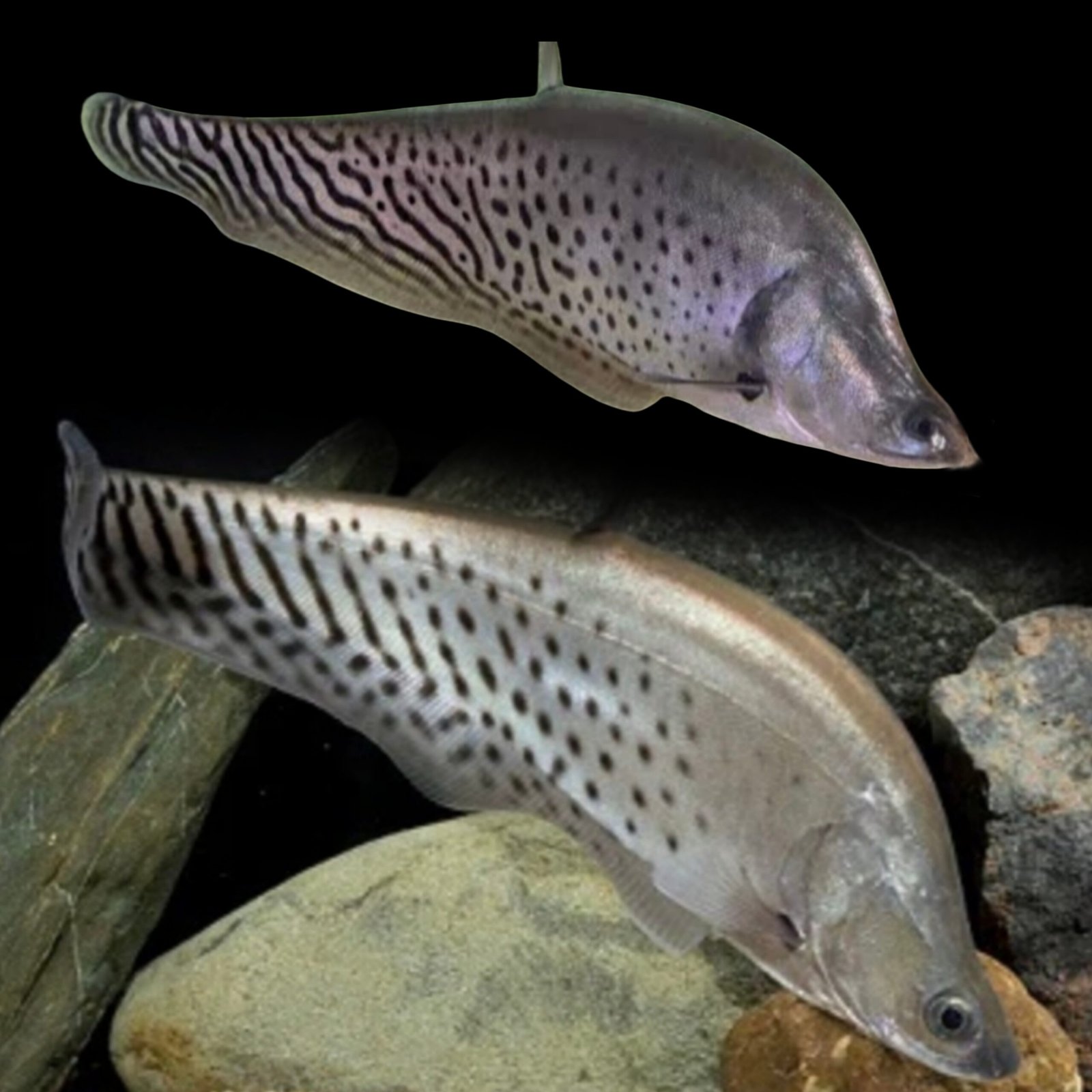
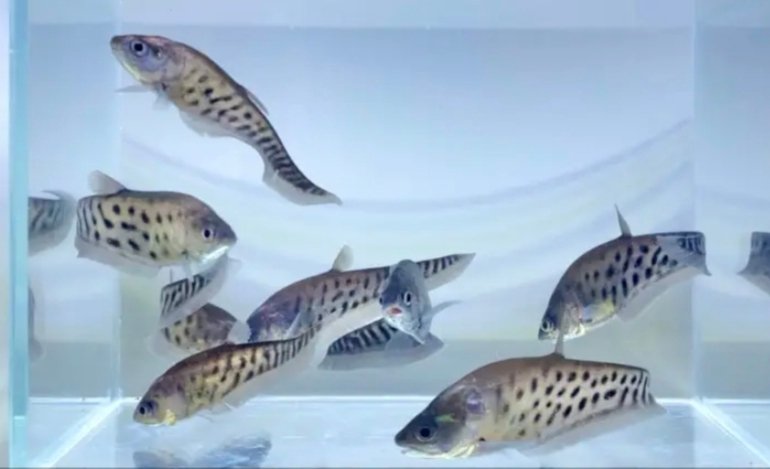
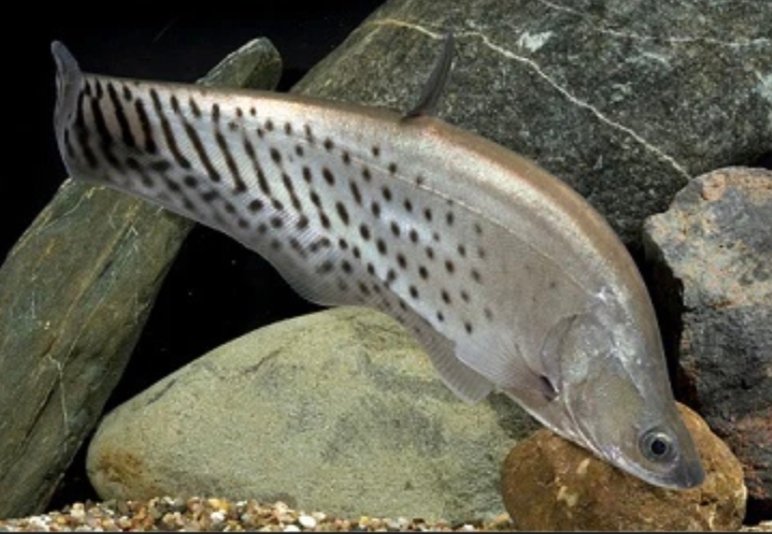
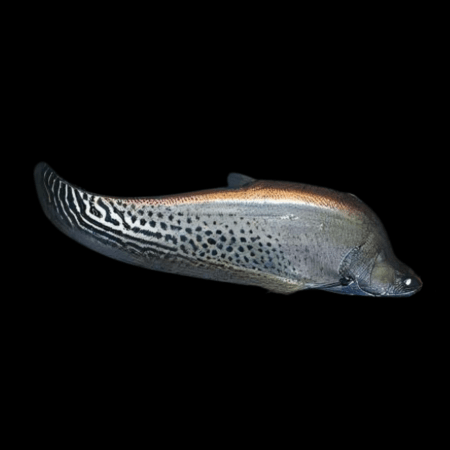
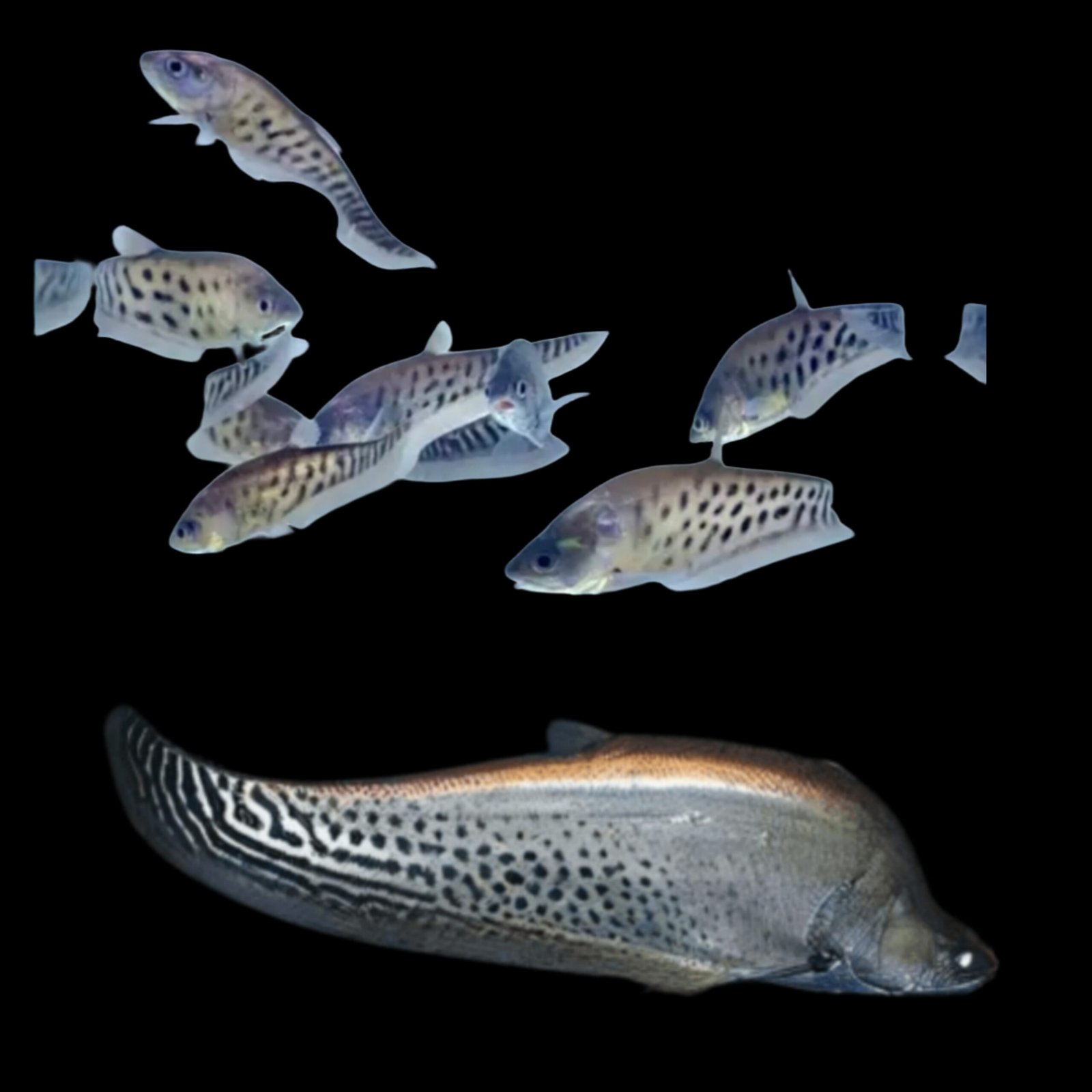
Appearance: Elegant, silver-to-golden body tone with faint, irregular dark vertical bands (unlike the round spots seen in Clown Knifefish).
Body Shape: Classic knife-shaped, elongated, and laterally compressed body with a continuous undulating anal fin.
Behavior: Nocturnal, shy when young, and becomes more confident as it matures. Can be mildly territorial with similar species.
Swimming Style: Smooth, graceful backward and forward swimming using its long fin — signature knife fish motion.
Special Note: Often mistaken for Chitala ornata, but Royal Knife Fish has vertical stripes instead of spots.
🍽️ Food
Type: Carnivorous
Diet: Prefers meaty foods like prawns, bloodworms, fish fillets, shrimp, earthworms, and high-protein sinking pellets.
Feeding: 1–2 times daily; feed during dusk or under dim light for best activity.
🛠️ Maintenance
Tank Size: Minimum 200 gallons (750 L) for adults.
Filtration: Heavy filtration with strong oxygenation — produces high bioload.
Decor: Add driftwood, caves, or large pipes for hiding. Keep an open swimming area in the center.
Lighting: Low or subdued — too bright lighting stresses them.
Water Change: 25–30% weekly to maintain water quality.
👥 Social Behavior
Minimum Group Size: Best kept singly — may fight with other Knife Fish.
Tank Mates: Suitable with large, peaceful fish like Arowanas, Oscars, Silver Dollars, or large Barbs.
Avoid: Small fish (will be eaten) and aggressive tank mates (can injure the Knife Fish).
✅ Do’s
Provide a large, dimly lit aquarium.
Feed protein-rich diet with variety.
Use strong, clean filtration.
Maintain consistent warm temperature.
❌ Don’ts
Don’t mix with smaller fish.
Don’t house multiple Knife Fish together unless in huge tanks.
Don’t keep in bright or noisy environments.
⭐ Quick Tips
The Royal Knife Fish is a rare and majestic species, valued for its striped pattern and elegant movement.
It is slightly less aggressive than the Clown Knife Fish but still needs plenty of space.
A true showpiece fish for advanced aquarists, combining grace, rarity, and beauty in one species.