


Description
Yellow Spotted Rabbit Snail (Tylomelania gemmifera)
📌 Basic Info
-
Scientific Name: Tylomelania gemmifera
-
Family: Pachychilidae
-
Origin: Sulawesi, Indonesia (lakes & rivers)
-
Size: 3 – 5 inches (7 – 12 cm)
-
Lifespan: 2 – 5 years
-
Tank Zone: Bottom dwellers
🌊 Water Parameters
-
TDS: 120 – 250 ppm
-
pH: 7.2 – 8.2 (alkaline water is important for shell health)
-
Temperature: 26 – 30°C (78 – 86°F)
-
Hardness: 6 – 12 dGH
🐌 Characteristics
-
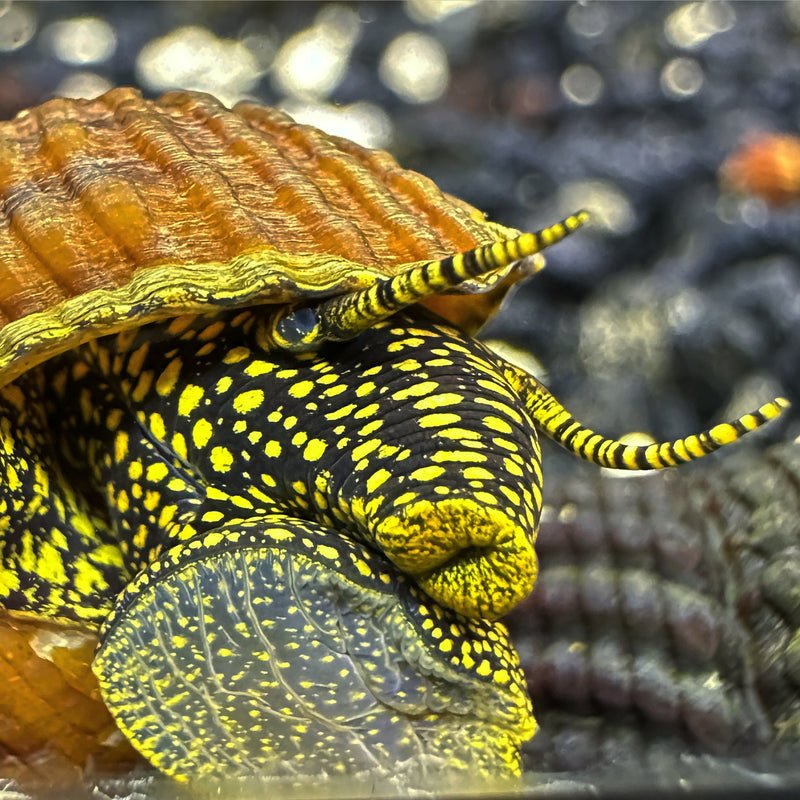
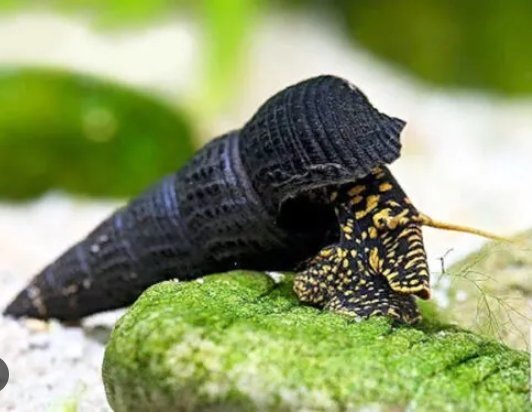
Known for their dark shells with bright yellow/orange spots on their body.
-
Long “rabbit-like” face with antennae.
-
Peaceful and slow-moving, great for community tanks.
-
Do not breed quickly – livebearers with very slow reproduction.
-
Active diggers, may burrow into sand.
🍽️ Food
-
Type: Omnivorous with herbivore preference.
-
Diet: Algae, biofilm, blanched vegetables (zucchini, spinach), sinking pellets, algae wafers, calcium-rich foods for shell health.
-
Feeding: Supplement food if algae is low in the tank.
🛠️ Maintenance
-
Tank Size: Minimum 20 gallons (larger for groups).
-
Filtration: Gentle but efficient (they dislike strong currents).
-
Decor: Sand or soft substrate (they burrow), driftwood, hardy plants, rocks.
-
Water Change: 20–30% weekly; avoid sudden changes.
👥 Social Behavior
-
Minimum Group Size: Can live alone, but thrive in small groups.
-
Tank Mates: Guppies, Tetras, Rasboras, Corydoras, peaceful shrimp, snails.
-
Avoid: Loaches, Pufferfish, Cichlids, Assassin Snails (they prey on snails).
✅ Do’s
-
Provide calcium for strong shell growth.
-
Use sand substrate to allow natural burrowing.
-
Keep in warm, stable, alkaline water.
❌ Don’ts
-
Don’t keep with snail-eaters.
-
Don’t expose to acidic or soft water (causes shell damage).
-
Don’t allow sudden temperature or pH drops.
⭐ Quick Tips
-
Unique snail with spotted yellow/orange body and rabbit-like face.
-
Peaceful algae-eater, great for planted community aquariums.
-
Slow breeder – won’t overpopulate tanks.