
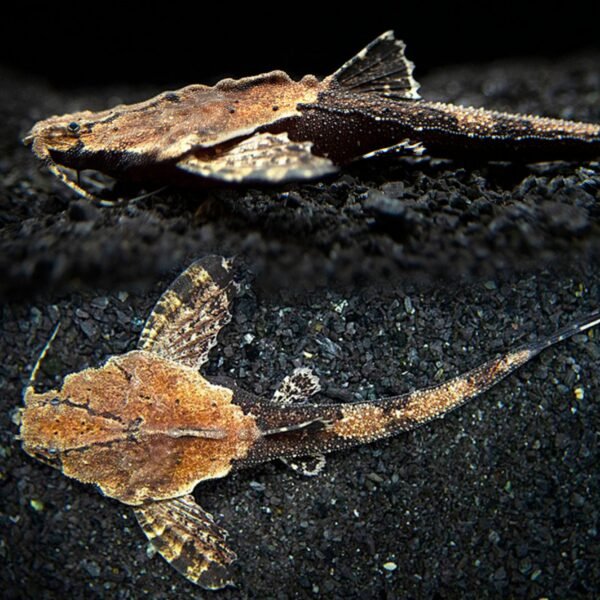
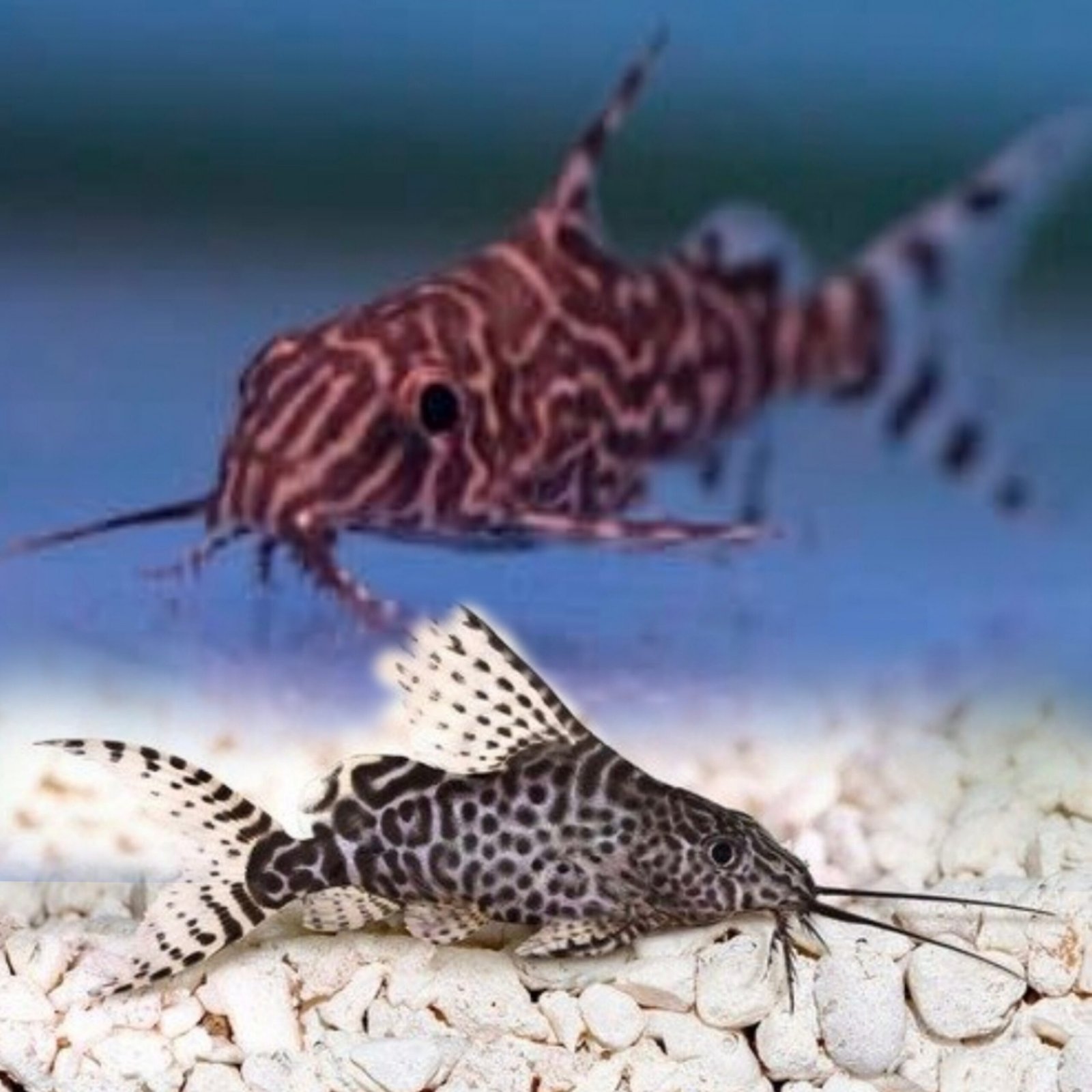
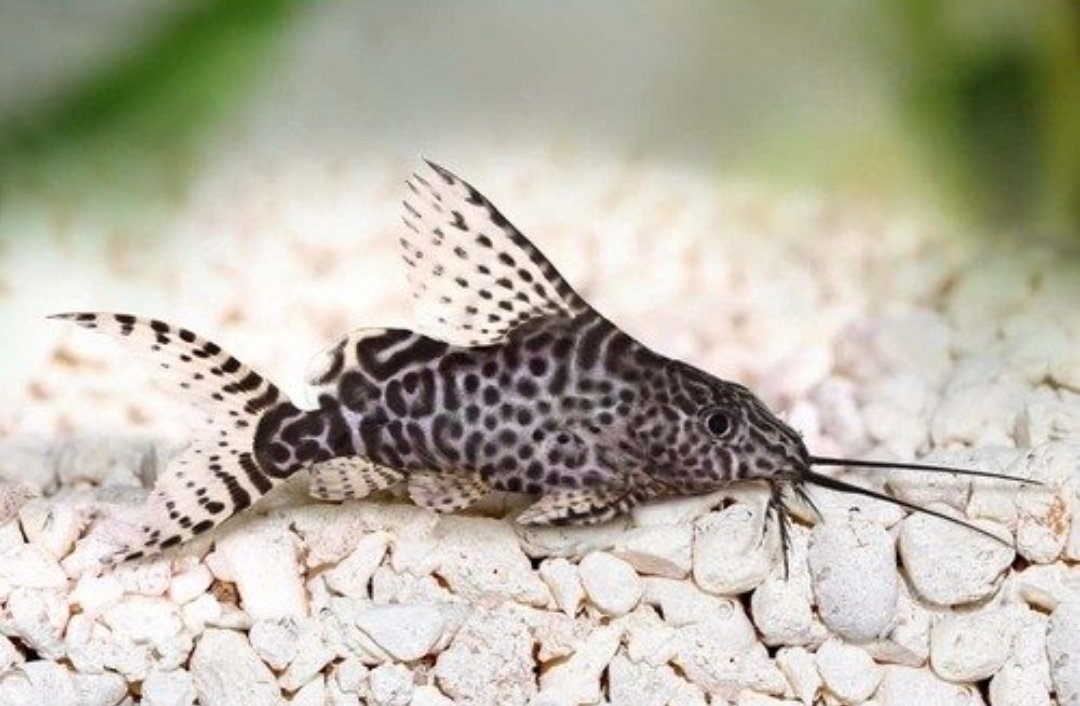
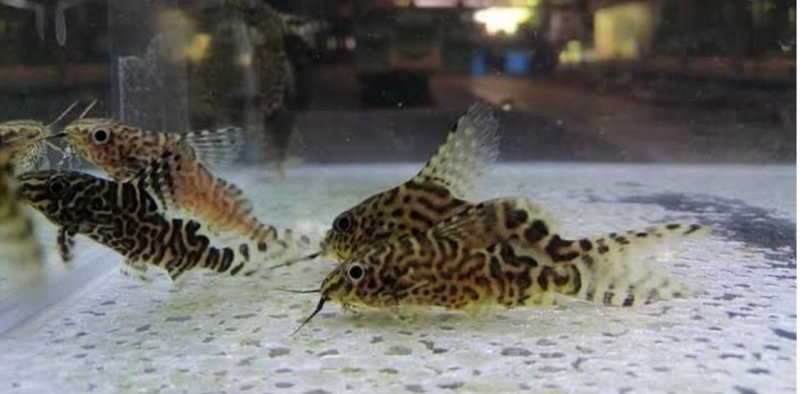
Description
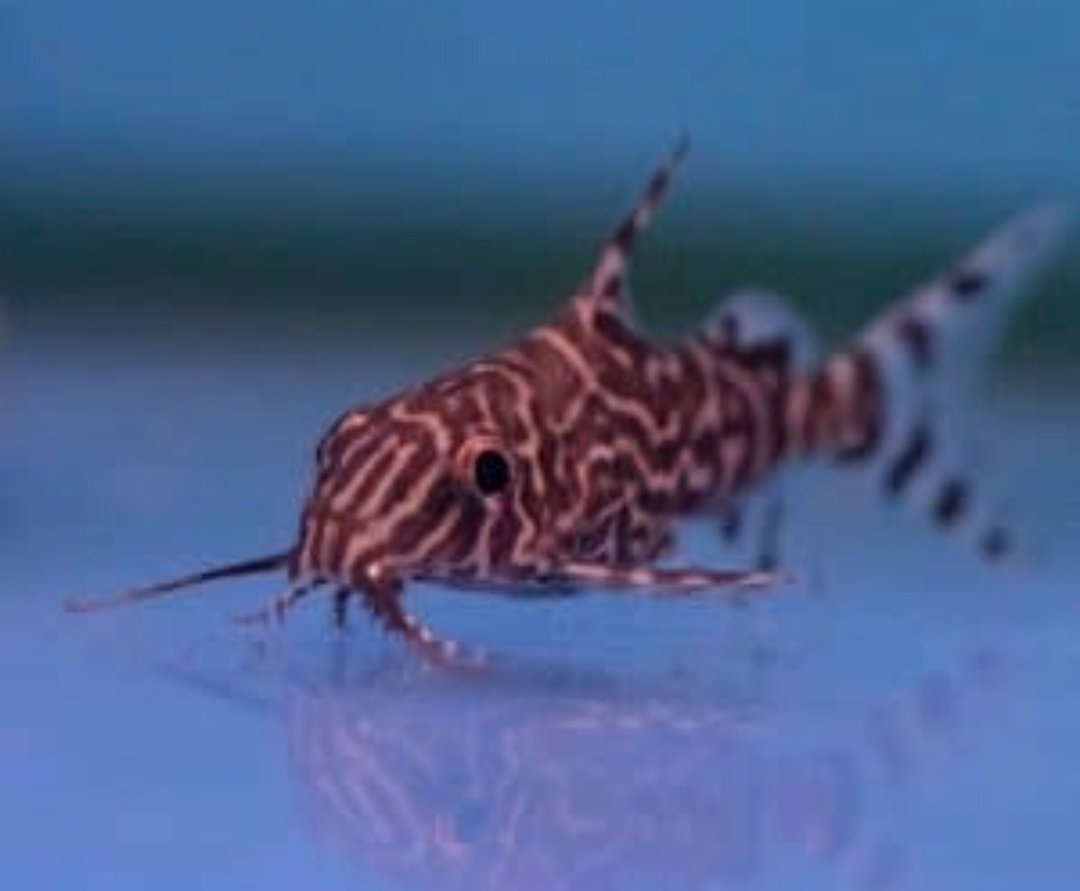
Featherfin Catfish (Synodontis eupterus)
📌 Basic Info
Scientific Name: Synodontis eupterus
Common Names: Featherfin Catfish, Featherfin Synodontis, Lace Synodontis
Family: Mochokidae (Upside-Down Catfish Family)
Order: Siluriformes
Origin: Central Africa — mainly in the White Nile and Chad River Basins, including Lake Chad and surrounding tributaries
Size: Up to 8 inches (20 cm) in captivity; can reach 10 inches (25 cm) in the wild
Lifespan: 15 – 20 years
Tank Zone: Bottom and mid dweller
🌊 Water Parameters
TDS: 100 – 300 ppm
pH: 6.5 – 7.8
Temperature: 24 – 28°C (75 – 82°F)
Hardness: 5 – 20 dGH
🐟 Characteristics
Body: Stout and armored body with fine spots covering its entire length.
Coloration: Brownish or gray body with dark spots and wavy markings; juveniles are more patterned than adults.
Fins: The dorsal fin is large and feather-like, giving it the name “Featherfin.”
Behavior: Generally peaceful but territorial toward other bottom dwellers.
Nature: Nocturnal; active at night and hides during the day.
Special Feature: Uses its pectoral spines to produce audible clicking or squeaking sounds — especially when stressed or handled.
🍽️ Food
Type: Omnivorous (bottom feeder)
Diet: Pellets, algae wafers, bloodworms, brine shrimp, and sinking carnivore sticks.
Feeding Frequency: Once or twice daily, preferably in the evening.
Tip: Include protein-rich foods to enhance growth and fin color.
🛠️ Maintenance
Tank Size: Minimum 250 liters (65 gallons) for a single adult.
Filtration: Strong filtration with high oxygenation — they produce moderate waste.
Substrate: Smooth sand or rounded gravel to protect whiskers (barbels).
Decor: Caves, driftwood, and rock tunnels for hiding.
Lighting: Low to moderate; prefers dim or shaded environments.
Water Change: 25–30% weekly for stability and cleanliness.
👥 Social Behavior
Group Size: Can be kept singly or in small groups (3–5).
Tank Mates: Peaceful with large tetras, rainbowfish, barbs, and cichlids.
Avoid: Very small fish or overly aggressive cichlids.
Compatibility Note: May be territorial with other Synodontis species.
✅ Do’s
• Provide caves and shaded zones.
• Use strong filtration and steady water flow.
• Offer a variety of sinking foods.
• Maintain stable warm water conditions.
❌ Don’ts
• Don’t keep in bright light with no hiding spots.
• Don’t use sharp decor — may damage fins or whiskers.
• Don’t keep with fin-nippers or hyperactive tank mates.
⭐ Quick Tips
The Featherfin Catfish is a beautiful, hardy, and peaceful bottom dweller ideal for large community tanks. Its flowing dorsal fin and spotted body make it one of the most eye-catching Synodontis species. Perfect for aquarists who enjoy active nocturnal fish with a long lifespan and striking presence.